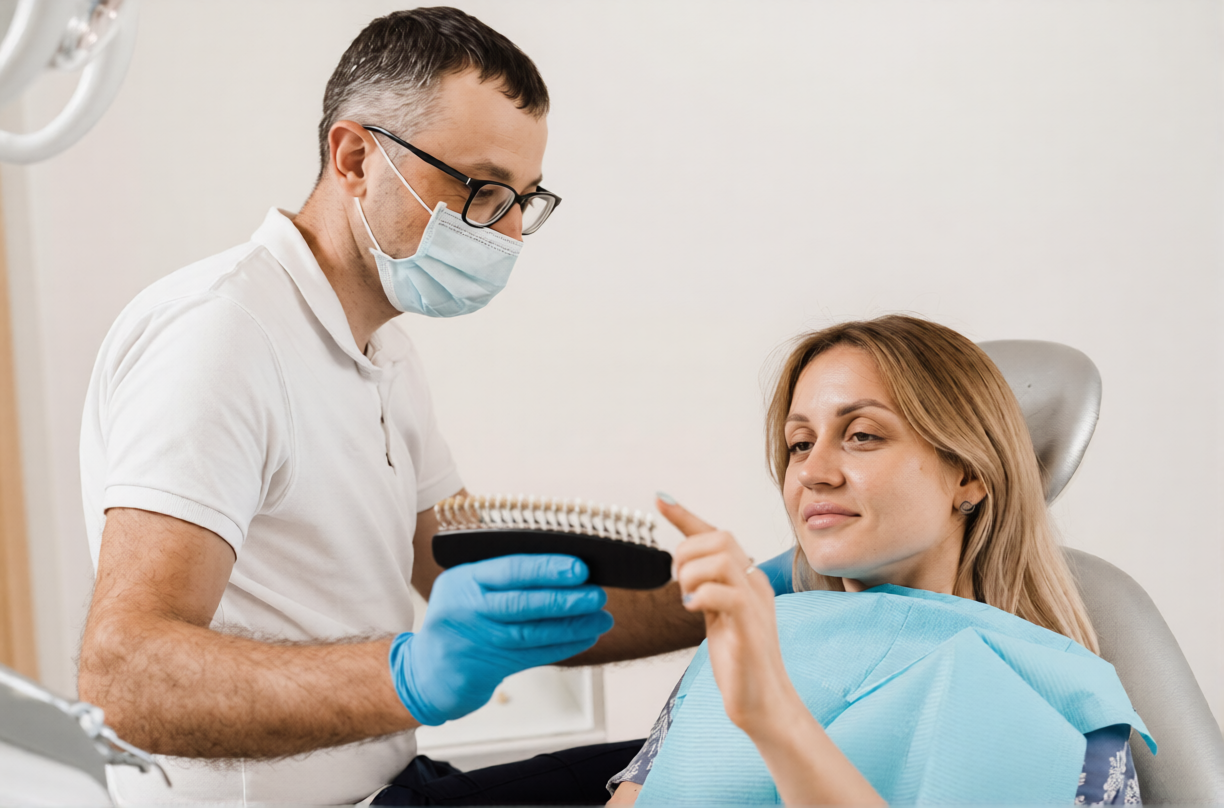
If you’re concerned about the appearance of your smile, you’re not alone. Many people feel self-conscious about discoloured teeth, chips, gaps, or slightly crooked teeth. You might be wondering whether dental veneers could help improve your smile without the time commitment of traditional orthodontics.
The question of whether you can put veneers on misaligned teeth is one that many patients ask. Veneers are a cosmetic treatment option, but understanding what they can and cannot address is essential before making a decision. While veneers may help with certain aesthetic concerns—including minor misalignment, stubborn staining, chips, and gaps—they’re not suitable for everyone or every situation.
This article provides honest, balanced information about what veneers can achieve and their limitations. We’ll explain how veneers work, when they may be appropriate for crooked teeth, and when orthodontic treatment might be a more suitable option. Individual circumstances vary, so a consultation with a dental professional is necessary to determine whether veneers are right for your specific needs.
Summary of the Content:
- Veneers are thin shells bonded to the front surface of teeth to improve appearance, masking rather than addressing underlying dental issues.
- Porcelain veneers typically last longer and resist stains better than composite veneers, though composite materials can often be applied in one visit.
- Veneers may improve the appearance of mildly crooked teeth by creating the illusion of straighter alignment, but they don’t move teeth or address bite problems.
- Severe misalignment, significant crowding, or orthodontic issues require orthodontic treatment rather than cosmetic treatments.
- Veneers can effectively cover stubborn discolouration, chips, cracks, and small gaps for suitable candidates.
- The veneer process typically requires multiple appointments and involves irreversible enamel removal during tooth preparation.
- Consultation is essential to determine whether veneers align with your cosmetic goals and overall oral health needs.
What Are Dental Veneers and How Do They Work?
Dental veneers are thin shells custom-made to fit over the front surface of your teeth. They’re designed to improve the appearance of visible teeth by covering flaws and creating a more uniform smile. Think of veneers as a cosmetic overlay—they mask aesthetic concerns rather than addressing the underlying tooth structure or dental issues.
Veneers are typically made from porcelain or composite materials. During the veneer placement process, a dental professional bonds these thin shells to your natural teeth using a strong bonding agent. The result is a layer that covers the front of each treated tooth, changing its colour, shape, or size as needed.
The customisation process is important for achieving a natural appearance. Your dentist takes impressions of your teeth to create veneers that fit well and match your desired look. Veneers can be colour-matched to surrounding teeth or designed to create an entirely new smile aesthetic, depending on your cosmetic goals.
It’s essential to understand that veneers are a cosmetic treatment option, not a restorative one. They improve how teeth look but don’t move teeth, strengthen weakened tooth structure, or address functional problems like bite issues. This distinction helps you set realistic expectations about what veneers can achieve.
Porcelain Veneers vs Composite Veneers
When considering veneers, you’ll encounter two primary types: porcelain veneers and composite veneers. Each has different characteristics that may make one more suitable than the other for your individual needs.
Porcelain veneers are made from dental-grade ceramic material in a dental lab. They’re known for their durability and stain-resistant properties. Porcelain veneers may last 10 to 15 years with proper care, though longevity varies between individuals. The material closely mimics the translucency of natural tooth enamel, often resulting in a natural appearance. However, porcelain veneers require multiple appointments—one for tooth preparation and impressions, and another for placement once the dental lab creates your custom veneers.
Composite veneers are made from composite resin materials and can often be completed in a single appointment. Your dentist applies and sculpts the composite material directly onto your teeth, then hardens it with a special light. This process is generally faster and costs less than porcelain veneers. Composite materials may be suitable for patients seeking a less invasive option or those addressing minor cosmetic concerns. However, composite veneers may not last as long as porcelain veneers—typically around five to seven years, though individual results vary.
Both types of veneers require the removal of a thin layer of enamel from your natural teeth during the tooth preparation phase. Porcelain veneers usually involve less enamel removal than crowns but more than some composite veneer applications. This enamel removal is irreversible, so consultation with a dental professional is essential before proceeding.
Your dentist can help you determine which type of veneers is most appropriate based on your aesthetic goals, budget, and the condition of your teeth and gums. Some patients value the long-lasting results and natural appearance that porcelain offers, while others prefer the convenience and lower cost of composite materials.
Can Veneers Address Misaligned or Crooked Teeth?
Veneers can improve the appearance of minor misalignment, but they don’t actually move teeth or address underlying alignment issues. Understanding this distinction is crucial when deciding whether veneers are suitable for your situation.
Veneers work by creating an illusion of straighter alignment. When bonded to the front surface of teeth, they can mask slight rotations, small overlaps, or uneven positioning. The result may be a smile that appears straighter and more uniform, even though your natural teeth haven’t changed position beneath the veneers. This is why some people refer to veneers as a cosmetic alternative to orthodontics.
The key limitation is that veneers are a cosmetic option, not a functional one. They don’t address bite problems, don’t create space in crowded mouths, and don’t move roots into healthier positions. If your misalignment affects how your teeth come together when you bite or causes jaw discomfort, veneers won’t address these orthodontic issues.
When Veneers Can Work for Minor Misalignment
Veneers may be suitable for mild to moderate misalignment. These situations typically involve aesthetic concerns rather than functional problems.
You might be a candidate for veneers if you have one crooked tooth that’s slightly rotated or tilted. Veneers may visually align a tooth with its neighbours in appropriate cases. Small gaps between teeth may be addressed by making veneers slightly wider, which can close the spaces when bonded. Teeth that overlap minimally may benefit from veneers that create a straighter appearance along the smile line.
Uneven teeth—where some appear longer or shorter than others—can be evened out with veneers of different lengths. This approach works well when the unevenness is mild and limited to the visible teeth in your smile zone. Some patients have one or two teeth that affect the overall aesthetics of their smile, and veneers could provide an aesthetic improvement without the need for orthodontic intervention.
However, these scenarios only apply when the misalignment is minor. Choosing veneers for mild cases means accepting that the underlying tooth structure remains unchanged. Your dentist will conduct a thorough examination during your initial consultation to determine whether your specific case falls within the range where veneers may work effectively.
When Orthodontic Treatment Is Needed Instead
There are situations in which veneers on misaligned teeth are not an appropriate option, and orthodontic treatment is necessary. Recognising these cases helps you avoid disappointment and helps you pursue the right treatment for your individual needs.
Severe crookedness or significant crowding may require orthodontic treatment to move teeth into the desired positions. When teeth overlap at unusual angles or there isn’t enough space in the jaw, veneers can’t create a natural appearance. Attempting to mask severe misalignment with veneers may result in bulky, unnatural-looking teeth or require excessive enamel removal, compromising tooth structure.
Bite problems are another clear indication that orthodontics is needed instead of veneers. If your teeth don’t come together properly when you close your mouth, or if you experience jaw pain, clicking, or difficulty chewing, these are functional issues that veneers cannot address. Traditional braces or clear aligners move teeth to create proper bite alignment, whereas veneers simply cover the teeth without addressing the underlying problem.
Misalignment affecting multiple teeth throughout your mouth is typically beyond the scope of veneers. While you could technically place veneers on many teeth, the result might look artificial, and the cost could exceed that of orthodontic treatment. In such cases, orthodontics addresses different concerns and moves teeth to their desired positions.
Some patients have both aesthetic and functional concerns. In certain cases, a combination approach may be suitable—orthodontic treatment to address alignment and bite issues, followed by veneers to enhance the final appearance. Your dental professional can discuss whether this combined approach might suit your needs during consultation.
Smile Concerns Veneers May Address
While veneers have limitations with severe misalignment, they can be highly effective at addressing other common smile concerns. For many patients, these cosmetic issues are the primary reason for considering veneers. Understanding what veneers do well helps you determine whether they align with your aesthetic improvement goals.
The following sections cover the three main areas where veneers may offer suitable cosmetic options for appropriate candidates: stubborn discolouration, damaged teeth, and gaps. These are situations where veneers can provide noticeable results when other treatments may not be effective or desired.
Discolouration and Stubborn Staining
Veneers can cover tooth discolouration that doesn’t respond well to whitening treatments. Some types of stains penetrate deep into the tooth structure, making them resistant to bleaching. Tetracycline staining—caused by antibiotic use during tooth development—creates grey or brown bands that are notoriously difficult to whiten. Fluorosis, which results from excessive fluoride exposure during childhood, can cause white spots or brown discolouration that whitening treatments may not improve.
Natural tooth colour also varies from person to person. Some individuals have naturally darker or more yellow teeth, while others develop discolouration as part of the natural ageing process. If you’re unhappy with your tooth colour and whitening hasn’t provided the results you hoped for, veneers could offer an alternative.
Porcelain veneers are particularly stain-resistant. Unlike natural enamel, porcelain doesn’t absorb pigments from coffee, tea, red wine, or other staining foods and beverages as readily. This means your new smile may maintain its appearance for years with proper care, though individual results vary.
Composite veneers can also effectively cover discolouration, though they may be more prone to staining over time than porcelain. Patients choosing composite materials should maintain good oral hygiene habits and avoid excessive consumption of staining substances to help maintain the appearance of their veneers.
Chipped, Cracked, or Worn Teeth
Dental veneers offer a cosmetic option for teeth damaged by chips, minor cracks, or general wear. Chips can occur from biting hard foods, accidents, or teeth grinding. Cracks may develop from trauma or structural weakness. Wear happens gradually over time, especially for patients who clench or grind their teeth.
Veneers cover these problems by bonding a new surface over the damaged area. The veneer process involves minimal enamel removal, followed by placement of a thin shell that restores the tooth’s appearance. For chips along the biting edge or small cracks visible when you smile, veneers may create a smooth, uniform surface that can blend with your natural teeth.
However, veneers are cosmetic rather than structural. They cover damage but don’t strengthen the underlying tooth or protect it from further harm. If a tooth has extensive damage, structural weakness, or a crack that extends below the gum line, crowns or other restorative treatments may be more appropriate than veneers. Your dentist will assess the extent of damage during examination to determine which treatment options are suitable.
Gaps Between Teeth (Diastemas)
Small to moderate gaps between teeth—called diastemas—can be addressed effectively with veneers. This is one area where veneers excel, providing immediate results without the months or years required for orthodontic intervention.
Veneers close gaps by being slightly wider than the natural tooth beneath them. When bonded to the teeth on either side of a gap, the veneers meet in the middle, closing the visible space. This approach works well for gaps in the front teeth, which are most visible when you smile.
Unlike traditional orthodontics, which moves teeth gradually to close spaces, veneers provide an instant transformation. Treatment typically requires a few appointments to complete. Results vary between individuals. This appeals to patients who want faster results or prefer to avoid braces or clear aligners.
It’s important to understand that the underlying teeth don’t move when you choose veneers. The natural teeth remain in their original positions, with the gaps still present beneath the veneers. This is purely a cosmetic approach. If the gap results from a mismatch between jaw and tooth size, or from orthodontic issues contributing to it, those underlying causes remain unchanged.
For patients with multiple gaps or spacing issues throughout the mouth, a combination of treatments might be necessary. Your dentist can discuss all treatment options and help you determine the most suitable approach for your individual needs and cosmetic goals.
The Veneer Treatment Process in Melbourne
Understanding what happens during the veneer process can help you feel more prepared and comfortable with the treatment. While specifics vary depending on whether you choose porcelain or composite materials, the general process follows a similar pattern.
Your journey begins with an initial consultation. During this appointment, your dental professional examines your teeth and gums to assess whether you’re a suitable candidate for veneers. They’ll discuss your cosmetic goals, evaluate your oral health, and explain what veneers can and cannot achieve in your specific case. This is the time to ask questions to understand what veneers may achieve in your situation. Your dentist may take photos, X-rays, or impressions to plan your treatment.
If you decide to proceed, the next step is tooth preparation. For porcelain veneers, this typically involves removing a thin layer of enamel from the front of each tooth receiving a veneer, usually about 0.5mm. This removal creates space for the veneer to help achieve a natural appearance. The amount removed is minimal compared to what’s required for crowns, but it’s irreversible. Once enamel is removed, it doesn’t grow back, which is why consultation and careful consideration are essential before proceeding.
After preparation, your dentist takes impressions of your teeth. These impressions are sent to a dental lab where skilled technicians create your custom veneers. The fabrication process typically takes 1-2 weeks. During this time, you may wear temporary veneers to protect your prepared teeth and maintain your appearance.
When your porcelain veneers are ready, you return for the placement appointment. Your dentist checks the fit and colour of each veneer, making any necessary adjustments before bonding them to your teeth. The bonding process uses an adhesive and curing light to attach the veneers. Once bonded, the veneers become a part of your smile.
Composite veneers follow a somewhat different timeline. Because they’re made from composite materials applied directly to your teeth, they can often be completed in one or two appointments. Your dentist prepares your teeth (though sometimes with less enamel removal than porcelain requires), then builds up the composite material layer by layer, sculpting it to the desired shape and hardening it with a special light. Final adjustments are made to provide a proper fit and appearance.
After placement, you’ll have a second visit or follow-up appointment to check how your bite feels and make any final adjustments if needed. Your dentist will provide guidance on caring for your new veneers. This typically includes brushing with a soft-bristle toothbrush, using non-abrasive toothpaste, and attending regular dental visits for monitoring and maintenance.
Veneers Compared to Alternative Dental Treatments
Veneers aren’t the only option for addressing cosmetic concerns. Understanding how veneers compare to other treatments can help you make an informed decision about which approach may be most suitable for your individual needs.
Orthodontic treatment—including traditional braces and clear aligners—is the appropriate choice when you actually need to move teeth. Braces use brackets and wires to apply pressure over months or years, gradually shifting teeth into the desired position. Clear aligners like Invisalign use a series of custom plastic trays to achieve similar results with a less visible appearance. Unlike veneers, orthodontics works to manage underlying alignment issues, bite problems, and jaw positioning. Treatment typically takes 12 to 24 months, though this varies. For patients with moderate to severe misalignment, orthodontic intervention provides functional benefits that veneers cannot.
Teeth whitening is an option if your primary concern is tooth colour. Professional whitening treatments may lighten natural teeth several shades for many patients, addressing surface stains and some deeper discolouration. Whitening is less invasive than veneers and doesn’t require enamel removal or alteration of tooth structure. However, whitening may not work well for certain types of stains (like tetracycline) and doesn’t address chips, gaps, or shape issues. Results typically last one to three years with proper care, and touch-up treatments may be needed to maintain brightness.
Dental bonding uses composite resin materials applied directly to teeth to cover chips, close small gaps, or improve shape. Bonding is similar to composite veneers but typically covers a smaller area and may be used for minor restorations rather than covering the whole tooth. Bonding can often be completed in a single appointment and costs less than veneers, making it a good option for patients with minor cosmetic concerns or budget constraints. However, bonding material may not last as long as veneers and can stain more easily over time.
Crowns are appropriate when a tooth has extensive damage, large fillings, or structural weakness. Crowns cover the entire tooth rather than just the front surface, designed to provide both cosmetic improvement and structural support. They’re more invasive than veneers, requiring the removal of more tooth structure, but they protect and strengthen compromised teeth. For patients with moderate to severe tooth damage, crowns may be a more suitable long-term option than veneers.
Each treatment option has benefits and considerations. The most suitable choice depends on your specific dental issues, cosmetic goals, timeline, and budget. Consultation with a dentist provides personalised guidance based on a thorough examination of your individual circumstances.
Are You a Suitable Candidate for Veneers?
Not everyone is an appropriate candidate for veneers. Several factors influence whether veneers are likely to provide the results you’re hoping for. While only a dental professional can make a definitive determination after examining you, understanding general candidacy criteria can help you assess whether veneers might be worth exploring.
Good oral health is essential. Veneers are a cosmetic treatment, not a restorative one, so your teeth and gums should be healthy before proceeding. If you have active tooth decay, gum disease, or oral infections, these issues need to be addressed first. Veneers bond to your natural tooth structure, so the foundation needs to be sound. Your dentist will conduct a thorough examination during your initial consultation to assess your overall oral health and determine whether any preliminary treatments are necessary.
The severity of the concerns you’re addressing matters. Veneers work well for mild to moderate cosmetic issues—slightly crooked teeth, minor chips or cracks, stubborn stains, and small gaps. If your concerns are more severe, other treatments may be more appropriate. Patients with one crooked tooth or a few misshapen teeth may be good candidates, while those with severe crookedness affecting multiple teeth may need to consider orthodontics instead.
Realistic expectations are crucial. Veneers can create a dramatic aesthetic improvement, but they don’t address underlying dental issues, move teeth, or provide structural support. If you understand that veneers are a cosmetic option that masks rather than addresses the underlying tooth structure, you’re more likely to be satisfied with the results. Patients expecting veneers to function like orthodontic treatment or to strengthen damaged teeth may be disappointed.
Sufficient enamel is necessary for veneer placement. Because the veneer process requires minimal enamel removal during tooth preparation, you need to have adequate enamel to begin with. Patients who have already lost significant enamel due to acid erosion, aggressive brushing, or previous dental work may not have enough remaining tooth structure for veneers. Your dentist will assess your enamel during the examination.
Habits such as severe teeth grinding (bruxism) can affect the longevity of veneers. While veneers can be long-lasting with proper care, they’re not indestructible. Patients who grind their teeth may wear down or crack veneers over time, just as grinding damages natural teeth. If you grind your teeth, you may need to wear a protective mouthguard at night to prevent damage to your veneers. Your dentist can discuss this during the consultation and recommend appropriate preventive measures.
Commitment to oral hygiene and regular maintenance is important. Veneers require regular brushing, flossing, and dental check-ups to maintain both the veneers and the underlying natural teeth. Good oral hygiene habits help reduce the risk of decay around the veneer margins and support gum health. Patients who are willing to commit to ongoing care may experience better outcomes over time.
Age can be a consideration in some cases. Young patients whose teeth are still developing may not be appropriate candidates until their tooth structure is fully mature. Your dentist can advise whether it’s suitable to wait before proceeding with veneers.
The recommended way to determine whether you’re a suitable candidate is to schedule a consultation with a dental professional. They can examine your specific situation, discuss your cosmetic goals, and provide personalised recommendations based on your individual needs.
Final Thoughts
Dental veneers offer a versatile cosmetic treatment option for addressing several common smile concerns. They may cover stubborn discolouration that doesn’t respond to whitening, improve the appearance of chipped or cracked teeth, help close small to moderate gaps, and enhance the look of mildly crooked teeth for appropriate candidates.
However, it’s essential to understand what veneers can and cannot do. While veneers may improve the appearance of minor misalignment, they don’t move teeth, address bite problems, or manage underlying orthodontic issues.
If you’re considering veneers on misaligned teeth, The Dental Co. welcomes you to schedule a consultation. During your appointment, we can examine your teeth and gums, discuss what veneers may achieve in your specific case, and help you explore all available treatment options.
Results vary between individuals. Veneer placement involves irreversible alteration of tooth structure. Consultation required to assess suitability. Any invasive dental procedure carries risks. Before proceeding, seek a second opinion from an appropriately qualified health practitioner if desired.