Facebook

COSMETIC

Porcelain Veneers in Melbourne

A porcelain veneer is a thin shell bonded to the front of a tooth. Veneers can cover chips, gaps and discolouration and give your teeth a more even look. They are stain-resistant and, with proper care, are made to last — your dentist will first check whether your teeth and gums are suited to them.

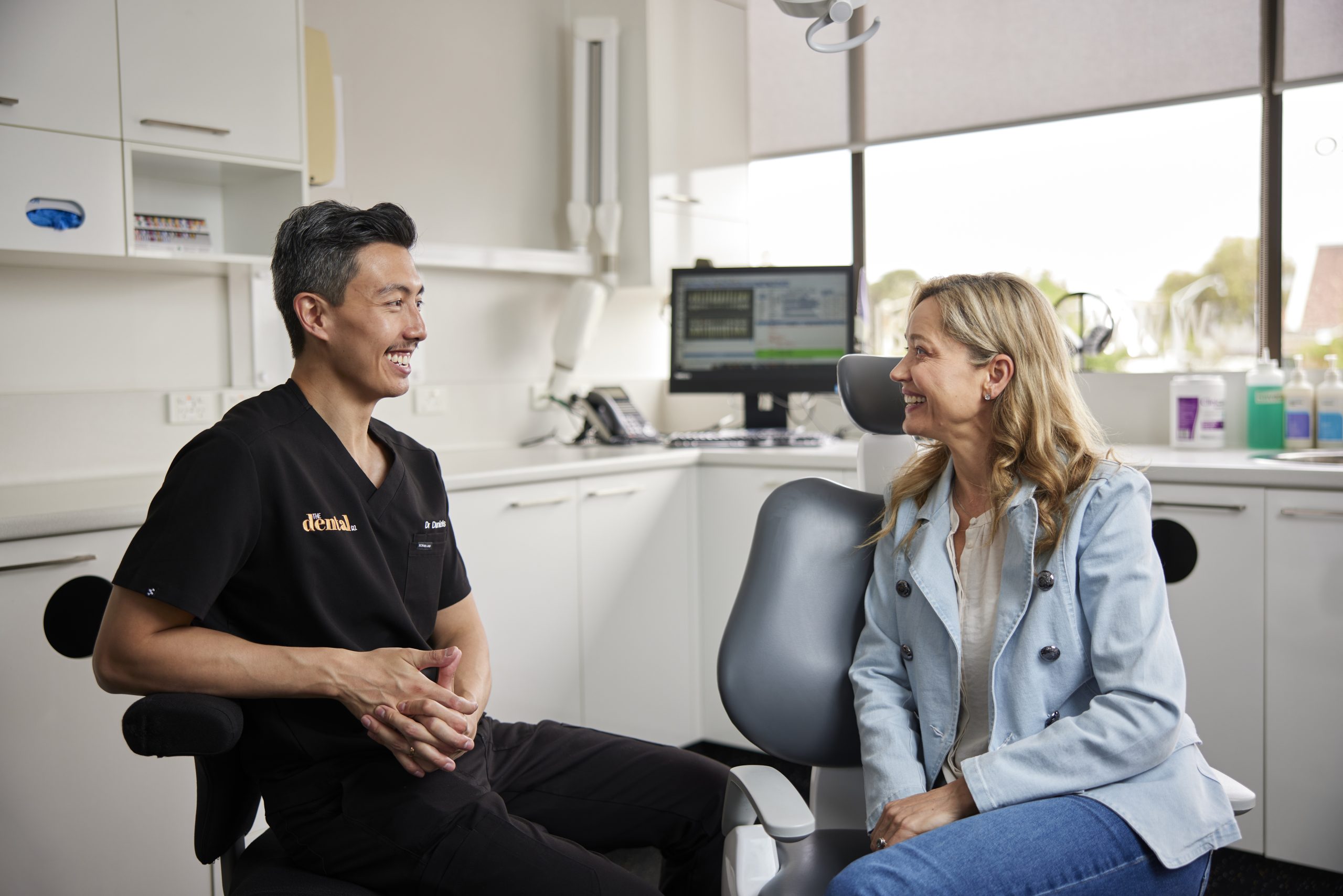
Transforming Smiles with Natural-Looking Veneers

In the pursuit of an ideal smile, we recognise that achieving desired results may require more than just teeth whitening or orthodontic treatment. Sometimes, a restorative approach is necessary.

At The Dental Co., we understand the balance of artistry and science needed for a transformative smile makeover experience. In these cases. In these cases, we may consider porcelain veneers and crowns.

Benefits Of Porcelain Veneers

One of the key benefits of porcelain veneers is their ability to transform your smile quickly and effectively. They can address imperfections such as chips, gaps, and discolouration, giving you a uniform and natural-looking appearance.

Additionally, porcelain veneers are durable and stain-resistant, providing long-term results with proper care. They can improve the appearance of your teeth.

Payment Options

We accept private health funds and other payment methods. See our payment options for the full list, and check the total cost, fees and terms before you start treatment.

Can porcelain veneers be reversed?

No. Porcelain veneers need a thin layer of enamel removed from the front of each tooth, so the treatment cannot be reversed. Those teeth will always need a veneer or another covering, such as a new veneer or a crown.

The tooth stays alive under the veneer. It can still decay along the edges, and the gum around it can still become inflamed, so brushing, cleaning between the teeth and regular check-ups matter as much as before. If a veneer chips or comes loose, the tooth underneath needs a new veneer or a crown.

Before you choose veneers, ask your dentist whether an option that removes little or no tooth, such as teeth whitening or clear aligners, could meet your goal.
Make A Booking

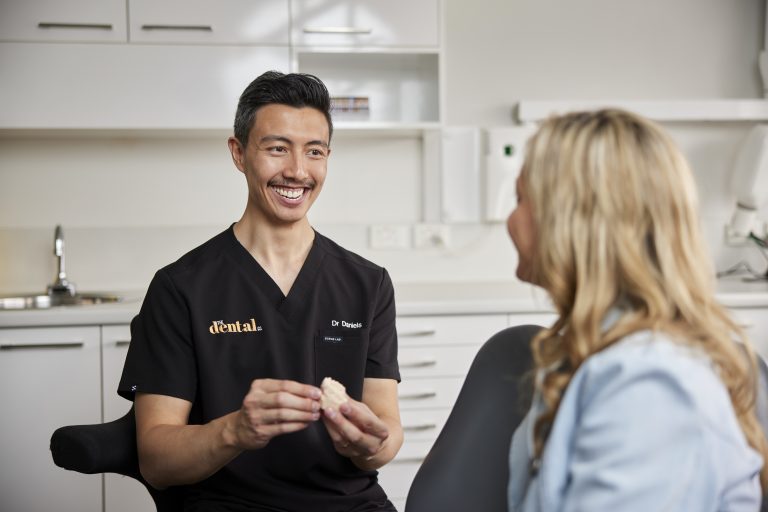
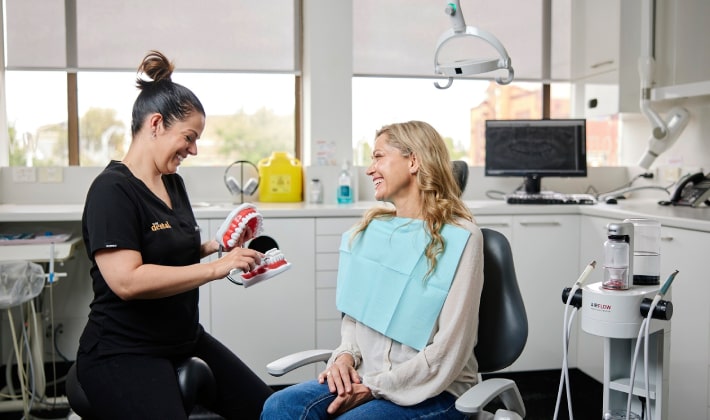
A member of the dental team explaining treatment with a model of the teeth

Porcelain veneers compared with other options

OptionWhat it doesIs tooth removed?How long it lasts
Porcelain veneersCovers the front of the teeth to change their shape, size or colourYes, a thin layer of enamelIn a 2016 review of 13 studies, 89% were still in place after a median of 9 years
Composite veneers or bondingTooth-coloured resin shaped onto the tooth, usually in one visitLittle or noneUsually needs repair or replacement sooner than porcelain, and stains more easily
Teeth whiteningLightens the colour of natural teethNoFades over time and can be topped up
Clear alignersStraightens crooked or crowded teeth and closes gapsUsually no. Some plans remove a very thin layer of enamel from between teeth to make spaceRetainers hold the new position
Dental crownsCovers the whole visible tooth; used for broken or heavily filled teethYes, more than for a veneerDepends on the tooth and the material

For more detail, read porcelain or composite veneers: which lasts longer and veneers, crowns or bonding. If several of your teeth need different treatments, see smile makeovers.

How long does porcelain veneer treatment take?

Porcelain veneer treatment usually takes 2 to 4 weeks from the first consultation to fitting, with 2 to 3 main visits.

StageUsual time
Consultation and assessment30 to 60 minutes
Treating decay or gum disease, if neededOften adds 1 to 2 weeks
Preparing the teeth and taking impressions1 to 2 hours, depending on the number of teeth
Laboratory making the veneers (temporary veneers are worn)2 to 3 weeks
Fitting and bonding1 to 2 hours

Read the full veneer treatment timeline and the porcelain veneer procedure guide.

How much do porcelain veneers cost?

The cost of porcelain veneers is the fee per veneer, times the number of teeth your dentist recommends, plus any listed extras such as X-rays or treatment needed first. Your dentist explains the total before treatment begins.

Things that change the cost include:

  • the number of teeth that need a veneer, which your dentist decides after examining your teeth;
  • whether decay or gum disease needs treatment first;
  • the porcelain and the laboratory that makes the veneers;
  • whether you need other treatment, such as whitening of the other teeth so they match.

Medicare and health funds. Medicare does not pay for most dental services, and cosmetic procedures such as porcelain veneers are not covered by Medicare. Private health insurance may help with some costs, depending on your fund and level of cover, so check with your fund before you start.

We accept private health funds and other payment methods. See our payment options for the full list, and check the total cost, fees and terms before you start treatment. Read more about what affects the cost of veneers.
Make A Booking

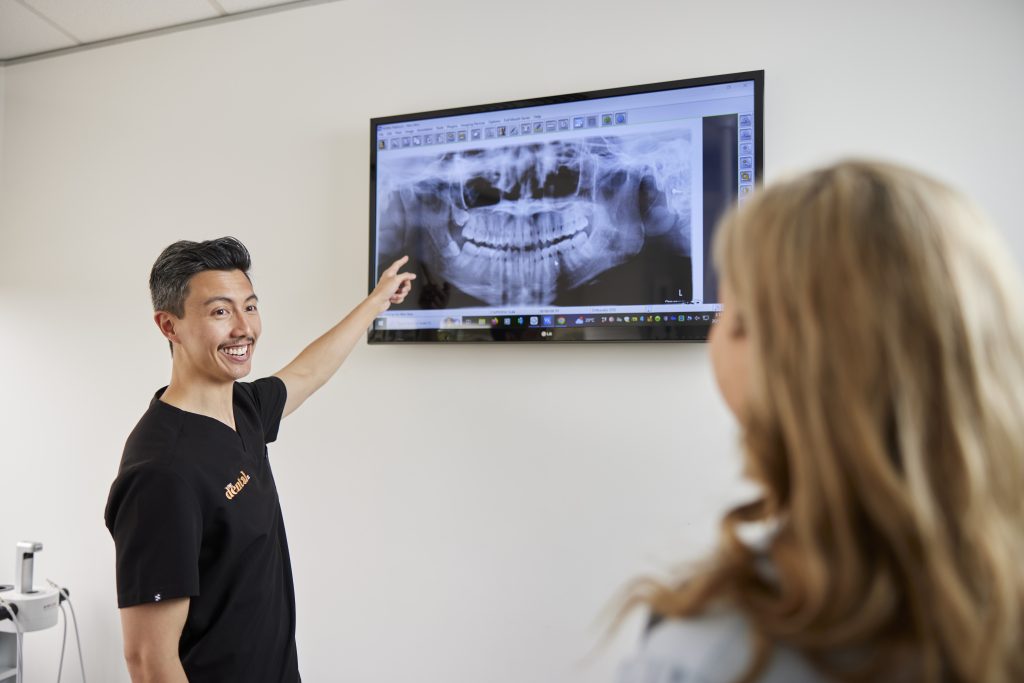
A dentist at The Dental Co. explaining a dental X-ray to a patient

How long do porcelain veneers last, and what can go wrong?

A 2016 review of 13 clinical studies estimated that 89% of porcelain veneers were still in place after a median of 9 years. The same review reported these problems:

  • about 4% chipping or fracture of the porcelain
  • about 2% a veneer coming loose
  • about 2% staining along the edges
  • about 2% the nerve of the tooth needing treatment
  • about 1% new decay under the edge of a veneer

After treatment, some people notice short-term sensitivity to hot and cold, or gums that are tender around the new veneers. To help veneers last, brush twice a day, clean between your teeth, avoid biting hard objects such as ice or pens, wear a night guard if you grind your teeth, and keep up regular check-ups. Read more about daily care for veneers.

Results vary from person to person, and your dentist will explain the risks, alternatives and likely outcome for your teeth before you decide.

Frequently Asked Questions

Find answers to common questions about porcelain veneers in Melbourne.

What dental issues can porcelain veneers help address?

Porcelain veneers are a great option for those looking to improve the appearance of their teeth. They offer a versatile option for a variety of dental imperfections. The benefits of porcelain veneers extend beyond simple cosmetic enhancement. Porcelain veneers are designed to address the following:

  • Discolouration:
    Stubborn stains or discolouration that might not respond effectively to conventional whitening methods can be addressed. They provide a bright, natural-looking finish that blends seamlessly with your surrounding teeth.
  • Minor Flaws:
    They can also address chips, small cracks, or irregularities that disrupt the seamless appearance of your smile. This subtle enhancement can make a significant difference in the overall aesthetics of your smile.
  • Gaps:
    It can work on small gaps or spaces between teeth that you’d like to have addressed. Porcelain veneers can fill these spaces, creating a more cohesive and aligned smile. Veneers can close small gaps without orthodontics, but a thin layer of enamel is removed first, so the treatment cannot be reversed.

By addressing these common dental concerns, porcelain veneers can improve the look of your smile. Whether dealing with discolouration or minor imperfections, veneers provide a durable and aesthetically pleasing result.

How long do porcelain veneers last?

In a 2016 review of 13 studies, 89% of porcelain veneers were still in place after a median of 9 years. Crowns have a different lifespan, which depends on the tooth, material and care. Regular dental check-ups and good oral hygiene practices contribute to their longevity. Several factors can affect its longevity, including:

  • Quality of Porcelain Materials:
    High-quality veneers usually offer better durability, which can extend their lifespan.
  • Proficiency of the Dentist:
    Proper application by an experienced dentist provides a secure bond to the tooth, contributing to the longevity of the veneers.
  • Personal Habits:
    Habits such as avoiding excessive force on the veneers and maintaining good dental health can significantly impact how long the veneers last.
  • Environmental Factors:
    Exposure to acidic foods and beverages over time may affect the longevity and appearance of the veneers.

Each of these factors plays a role in determining how long your porcelain veneers will last. It is important to consider them when planning your treatment.

Are porcelain veneers suitable for everyone?

Porcelain veneers are a great option for people looking to enhance the appearance of their smile. However, a consultation with our team is necessary to determine if they are the right choice for your specific dental needs. Ideal candidates for porcelain veneers generally meet the following criteria:

  • Healthy Teeth and Gum Tissue:
    People with no significant decay, gum disease, or other oral health issues are better candidates for veneers. Addressing any underlying dental problems is crucial before considering veneers, as these issues could compromise the natural tooth structure.
  • Sufficient Natural Tooth Enamel:
    Veneers require a thin layer of enamel to be trimmed from the teeth. Those with adequate enamel thickness and healthy tooth shape are usually more suitable for the procedure.
  • Minor Cosmetic Concerns:
    Veneers are suited for addressing cosmetic issues such as discolouration, minor chips, or gaps between teeth. They may not be ideal for those with more severe problems, which might require an additional procedure or a different restorative procedure altogether.
  • Commitment to Oral Care:
    One should be committed to practising good oral hygiene and attending regular dental visits. Proper care is essential to the longevity and appearance of veneers, helping to maintain the results of this restorative procedure.
  • Realistic Expectations:
    It’s important for candidates to have valid expectations about what veneers can achieve. While they can enhance your smile, they are not a treatment for every dental issue, especially for more complex conditions like bite issues.

If you meet these criteria, porcelain veneers could be a highly effective way to achieve the smile you desire. However, a thorough evaluation by a dental professional is necessary to confirm if veneers are the right fit for your dental health.

Do porcelain veneers require special care?

Porcelain veneers require consistent and mindful care to maintain their appearance and durability.

  • Routine Oral Hygiene Practices:
    Maintaining good oral hygiene habits, including brushing, flossing, and regular dental check-ups, are essential. Use a non-abrasive toothpaste and brush twice daily to prevent plaque buildup. Flossing daily helps remove food particles and plaque from between the teeth, allowing the gums around your veneers to stay healthy.
  • Avoiding excessive forces:
    It is crucial to avoid biting hard objects or using your teeth as tools to prevent damage. Veneers are thin and can still be damaged by excessive forces, which can cause chips, cracks, or other damage.
  • Wearing a nightguard:
    Teeth grinding, also known as bruxism, can put undue stress on veneers. If you grind your teeth, a nightguard can help extend their lifespan and protect them from undue wear.
  • Limiting the consumption of staining foods and beverages:
    Avoiding coffee, tea, and red wine can help keep your veneers looking bright. While porcelain veneers are resistant to stains, consuming large amounts of these can eventually affect their appearance.
  • Regular dental visits:
    Professional cleanings and evaluations help keep your veneers in optimal condition and address any potential issues early.

By following these care guidelines and maintaining strong oral hygiene habits, you can maintain your porcelain veneers in optimal condition. A consultation appointment with your dentist will provide further personalised advice to help you care for your veneers effectively.

Is the process of having veneers painful?

The process of getting veneers is generally comfortable. Local anaesthesia is used to numb the area, keeping you comfortable throughout the procedure. During the preparation phase, a thin layer of enamel is trimmed to make room for the veneers. This is usually done with minimal discomfort.

Some mild discomfort or sensitivity might be experienced after the procedure, particularly to hot or cold temperatures, but it usually subsides quickly. Your dentist may suggest over-the-counter pain relievers if needed. It’s also important to follow aftercare instructions given to help ease any temporary sensitivity and to support the longevity of your veneers.

Can I eat normally after getting dental veneers?

Yes, you can eat normally with dental veneers. However, it’s advisable to take some precautions to protect your veneers and maintain their appearance.

  • Avoid extremely hard or sticky foods
    that could potentially damage or dislodge the veneers, such as hard candies, ice, or sticky toffees.
  • Cut tougher foods into smaller pieces
    to reduce the pressure on your veneers, which can help prevent any cracking or chipping.
  • Chew with care
    especially when eating foods that require more effort, like crusty bread or nuts.
  • Maintain a balanced diet and good oral hygiene
    to support the longevity of your veneers. Brush and floss regularly to keep your natural teeth and gums healthy.
  • Limit staining foods and beverages
    such as coffee, tea, and red wine, to keep your veneers looking bright and prevent discolouration over time.

By following these guidelines, you can enjoy your favourite foods while keeping your veneers in great condition.

Will my health fund cover the cost of porcelain veneers?

Medicare does not cover cosmetic procedures such as porcelain veneers. Some private health funds may pay a benefit for parts of the treatment, depending on your level of cover.

Keep in mind that cosmetic procedures, such as porcelain veneers, are often considered elective and may not be fully shouldered by health funds. However, if the veneers are part of a treatment plan for a medically necessary issue, there might be more assistance available.

It’s important to consult your health fund provider to understand the details of your specific assistance.

Will porcelain veneers look natural?

Porcelain veneers are designed with the aesthetic goal of achieving a natural appearance. When done properly, they blend seamlessly with your existing teeth, providing a harmonious and realistic smile. This makes porcelain veneers for smile enhancement a great choice for those seeking a subtle yet impactful transformation.

  • Customised to Match Your Teeth:
    Porcelain veneers are personalised to match the colour, shape, and size of your natural teeth. This customisation allows veneers to look as natural as possible without appearing too bright or artificial.
  • High-Quality Materials:
    The porcelain used in veneers replicates the translucency and light-reflecting qualities of real tooth enamel. This enables them to collect and reflect light in a manner that nearly resembles natural teeth.
  • Craftsmanship:
    The success of the porcelain veneer procedure results in looking natural also depends on the dentist’s proficiency. A qualified dentist will carefully design and place the veneers to enhance your smile and complement your facial features.

When properly crafted and applied, porcelain veneers can significantly enhance your smile while maintaining a natural look. It’s essential to work with an experienced dental professional, especially when considering porcelain veneers for smile enhancement.

How many appointments are needed to complete the porcelain veneer process?

The porcelain veneer process usually requires multiple appointments to achieve planned progress and a natural-looking smile. The exact number of appointments can vary depending on specific needs, but most patients can expect around three visits.

  • Initial Consultation:
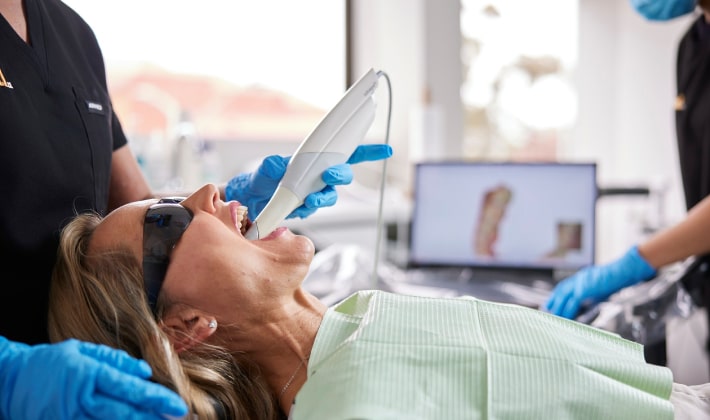
    The first appointment is dedicated to a consultation. A qualified dentist will evaluate your dental health and discuss your smile goals. They will also determine if porcelain veneers for smile enhancement are the right for you. This visit may also include taking X-rays or digital impressions to plan the treatment. During this consultation, you may also discuss the cost of porcelain veneers to understand what to expect financially.
  • Preparation and Impressions:
    During the second appointment, your dentist will prepare your teeth by trimming a thin layer of enamel to make room for the veneers. Impressions of your teeth are then collected and sent to a dental laboratory, where your veneers will be created.
  • Fitting and Placement:
    The final appointment involves fitting and bonding the veneers to your teeth. Your dentist will check the fit and appearance, make any necessary adjustments, and then bond the veneers in place.

In some cases, additional visits may be required for follow-up adjustments or to address concerns. By working closely with your dentist throughout the process, you can have a smooth experience and achieve the desired outcome for your smile.

Are there any risks or side effects associated with getting porcelain veneers?

Like any dental treatment, porcelain veneers have some potential risks to be aware of. It’s important to understand these factors so you can make a decision about your dental care.

  • Tooth Sensitivity:
    One of the most common side effects is increased sensitivity, particularly to hot and cold temperatures. This occurs because dental enamel is removed during the preparation process, which can expose the underlying dentin. Sensitivity usually decreases after a few days. If it doesn’t, visit your dentist for a check-up.
  • Irreversibility:
    The process of getting porcelain veneers is irreversible because the trimmed enamel cannot be restored. Once veneers are placed, you will always need them or an alternative support for your teeth.
  • Potential for Damage:
    While porcelain veneers are durable, they can still be damaged by habits like teeth grinding, biting hard objects, or trauma to the mouth. Cracked or chipped veneers may require restoration or replacement, which can be costly.
  • Colour Mismatch:
    If you decide to whiten your natural teeth after getting veneers, it’s important to note that they cannot be whitened. This could result in a colour mismatch between your veneers and your natural teeth if not managed properly.

While there are some possible side effects, you may find that the benefits of porcelain veneers outweigh these potential downsides. It’s essential to have a thorough consultation with your dentist to discuss these risks and determine if veneers are right for you.

Can I get porcelain veneers if I have gum disease or other dental issues?

If you happen to have gum disease or other oral conditions, it’s important to address these problems before considering porcelain veneers. Healthy gums and teeth are crucial for veneer treatment, as underlying issues can compromise the longevity and effectiveness of the treatment.

  • Gum Disease:
    Active gum disease must be addressed and managed before veneers can be applied. Gum disease can result in receding gums, which might expose the edges of the veneers, affecting both their appearance and stability.
  • Tooth Decay or Cavities:
    Veneers are not suitable for teeth with decay or cavities. These issues must be addressed to provide a strong, healthy foundation for the veneers.
  • Bite or Alignment Issues:
    Significant bite misalignment or jaw problems must be addressed before veneers are considered to avoid undue stress, which could cause your veneers to crack or dislodge.

After addressing your gum issues and improving your oral health, you may be considered for porcelain veneers. It’s important to have a thorough evaluation with your dentist to determine the optimal course of action for a beautiful smile.

Will getting porcelain veneers affect the health of my natural teeth?

Getting porcelain veneers involves modifying your natural teeth, but when done properly, it should not negatively affect their overall health. The procedure requires removing a thin layer of enamel, which is an irreversible alteration.

  • Enamel Trimming:
    The trimming of enamel is minimal, but it makes the tooth slightly more vulnerable without the veneer. The veneer provides a protective layer that both enhances the tooth’s appearance and reduces tooth sensitivity.
  • No Impact on Tooth Structure:
    Beyond the surface enamel, the structure of your tooth remains intact. The process doesn’t involve the nerve or deeper parts of the tooth, so your natural teeth remain healthy underneath the veneers.

While the process involves irreversible changes, porcelain veneers enhance the appearance of teeth without compromising their function. Regular dental check-ups and good oral hygiene practices will help maintain both your veneers and the health of your natural teeth.

Can I whiten my porcelain veneers if they become stained over time?

Porcelain veneers are supposed to be stain-resistant, but over time, they can still pick up some discolouration. It’s also important to note that, unlike natural teeth, porcelain veneers cannot be whitened with traditional teeth whitening treatments.

  • Non-Whitening of Veneers:
    The material used in porcelain veneers does not respond to whitening agents. Therefore, if your veneers become stained, whitening products will only affect the natural teeth surrounding the veneers. This can result in a mismatch in colour.
  • Preventive Measures:
    To keep your veneers looking bright, avoid coffee, tea, red wine, and smoking, as these stain teeth. Regular brushing and flossing also aid in eliminating surface stains.
  • Professional Cleaning:
    If your veneers become stained, your dentist may be able to polish them during a professional cleaning to restore brightness. However, this polishing won’t change the veneers’ inherent colour.

If significant staining occurs and the appearance of your veneers is affected, the most effective method might be to replace the veneers. Regular dental visits and mindful care can help keep your veneers looking bright and fresh for many years.

How do I get started with porcelain veneers?

Getting started is easy. Simply contact us to schedule a consultation. During your visit, we’ll assess your dental health, discuss your goals, and create a customised treatment plan to help you achieve your smile goals.

Once your plan is in place, we’ll guide you through each step of the entire process. With our professional care, you’ll know what to expect before each appointment.

Is there a warranty for porcelain veneers?

Yes, porcelain veneers at The Dental Co. are included in our 5-year warranty for restorative work. This warranty reflects our commitment to providing high-quality, long-lasting dental restorations.

Important aspects of our porcelain veneer warranty:

  • Duration:
    The warranty protects your veneers for 5 years from the placement date.
  • Scope:
    The warranty addresses potential issues related to the veneers’ durability and aesthetic qualities.
  • Maintenance:
    To keep your warranty valid, follow our care instructions and attend regular check-ups.

For comprehensive information about what’s included in the warranty and any specific terms or conditions, we recommend discussing this with our team during your consultation or next appointment.

Can you go back to normal teeth after veneers?

No. A thin layer of enamel is removed before porcelain veneers are bonded, so the teeth cannot go back to how they were. If a veneer is removed or breaks, the tooth needs a new veneer or a crown. This is why your dentist discusses options that remove little or no tooth first.

Does Medicare cover veneers?

No. Medicare does not pay for most dental services, and cosmetic procedures such as porcelain veneers are not covered by Medicare. Private health insurance may pay a benefit for some parts of the treatment, depending on your fund and level of cover, so check with your fund before you start.

How many veneers will I need?

Only the teeth that need treatment. Your dentist examines your teeth and recommends veneers only where another option, such as whitening or aligners, cannot reach your goal. Some people need one veneer, for example to match a chipped tooth to its neighbours. There is no standard number or package.

Can veneers fix crooked teeth?

Veneers can make slightly uneven teeth look straighter, but they do not move teeth. For crooked or crowded teeth, clear aligners are often recommended first because they move the teeth without reshaping their fronts, although some aligner plans remove a very thin layer of enamel from between teeth to make space. Read more about veneers on misaligned teeth.

Which lasts longer, porcelain or composite veneers?

Porcelain veneers usually last longer than composite veneers and stain less. In a 2016 review of 13 studies, 89% of porcelain veneers were still in place after a median of 9 years. Composite needs little or no enamel removed and can often be repaired, but usually needs repair or replacement sooner.

Book Your Appointment Today

Book Your Appointment Today

Experience exceptional dental care from your trusted dentist near Prahran. Whether you need routine check-ups, advanced restorative work, or cosmetic treatments, our dedicated team is here to provide comprehensive and personalised dental services. Contact us now to schedule your consultation and take the first step towards a healthier, brighter smile.

Right Menu Icon