

Your MRI booking form asks about implants, and you remember the tooth you had replaced years ago. You might know where it was fitted but have no idea which system was used. What should you put on the form, and who should you call?
Tell the MRI service about your dental implant before the scan, and ask which documents it needs. InsideRadiology says implants must be identified for safety assessment. At The Dental Co., our implant service includes assessment and treatment planning; a records enquiry is a different request from booking new treatment.
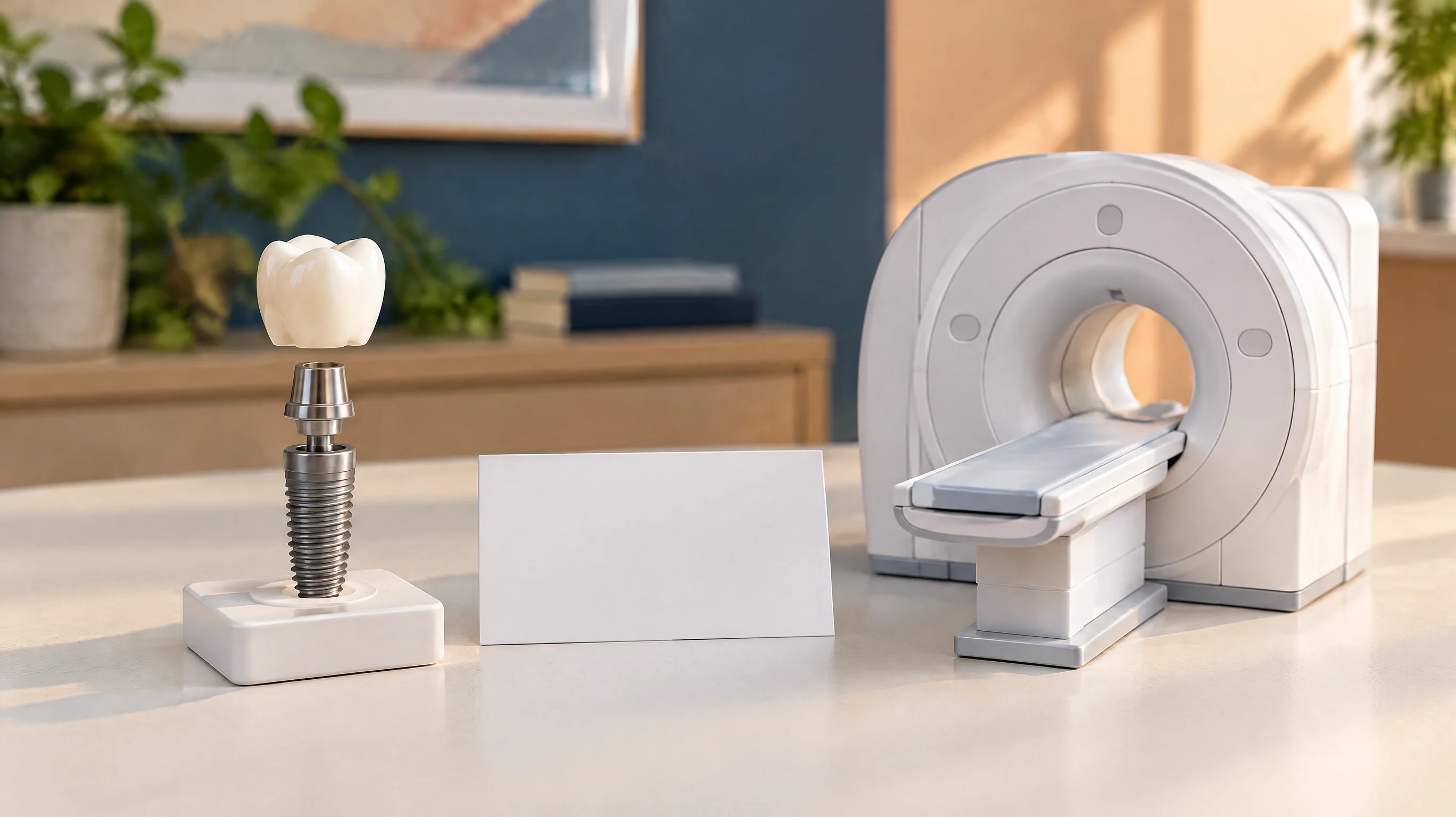
Does having a dental implant mean I cannot have an MRI?
A dental implant is something to disclose, not a reason to decide for yourself that the scan is either ruled out or cleared. The MRI service needs to assess your particular implant and the planned examination. InsideRadiology's MRI guidance, last modified 31 October 2018 and checked on 5 November 2026, explains that some implants can be scanned but need accurate identification first.
MRI uses strong magnetic fields and radiofrequency signals. InsideRadiology explains that interactions with some metal or electronic devices can cause movement, heating or malfunction. Its preparation section specifically includes magnetic dental implants among the devices that need attention. That warning does not mean every dental implant has magnetic parts; it means the device details matter.
If you have read that a particular implant material is compatible with MRI, give the imaging team the information you actually have. A material name on a website is not an assessment of your own dental work. If the form asks something you cannot answer, contact the service rather than filling in a guess.
What do the Australian sources ask you to disclose?
They ask you to identify implants and dental devices, with different levels of detail. HealthyWA's MRI guidance, checked on 5 November 2026, includes false teeth in its disclosure list. InsideRadiology goes further into implant documentation. Neither page identifies the dental work in your mouth.
| Source | What it means for your booking |
|---|---|
| WA Department of Health: HealthyWA | Tell MRI staff about metal implants and false teeth. This is general screening information, not a statement that every dental device prevents a scan. |
| RANZCR: InsideRadiology | Tell the radiology practice about implants before the scan and take the implant documents you have. The service may need more information to identify the device and assess the examination. |
Describe the dental work in your own words if that is all you know: one replacement tooth, a bridge, or a denture attached to implants. Our explanation of how dental implants work is useful background on the parts. It cannot identify your device or replace the MRI team's screening.
Which implant details should I ask the dental practice for?
Start with the MRI service's request, then ask the practice that provided the implant what it has on file. InsideRadiology advises bringing implant documents so the device can be identified. The following list is a records-enquiry aid, not a claim that every dental practice holds every document.
- Ask the imaging service which implant or dental-device details it needs for your scan.
- Tell the original dental practice which tooth or teeth were treated and approximately when.
- Ask whether the file contains an implant identification card, device labels, manufacturer or system information.
- Ask whether there is separate information about the crown, bridge, denture or its attachments, if the MRI service has requested it.
- Confirm where the information should be sent and whether the practice needs your authorisation.
- Tell the imaging team what is available and what is still unknown; ask it to confirm the next step.
You can say to the dental practice: 'I have an MRI booked and the imaging team has asked for details of my existing implant. Can you check which identification information is in my file?' Give the practice the imaging team's actual question, rather than asking reception for a general letter saying all dental implants can be scanned.
What if I have no implant card or the original clinic has closed?
Tell the MRI service what is missing before the appointment. InsideRadiology says the imaging team may need further information about an implant and that an alternative test might need to be arranged. Ask that team and your referring doctor how to proceed; do not cancel a needed examination or assume it can go ahead based on a general article.
Bring together what you do have: the original practice's name, an approximate treatment date, any treatment-plan correspondence and any device information already supplied. Label uncertain details as uncertain. A useful message is: 'I know which clinic placed it, but I do not have the system name. What information do you need next, and who should provide it?'
If the implant was placed elsewhere, including overseas, tell us that when you contact The Dental Co. We can discuss your enquiry, but the website does not establish that we can retrieve another provider's missing records or identify every outside implant system. Keep the MRI service involved while you ask where the original records may be held.
Do I need a dental appointment just to complete the MRI form?
Ask about a records enquiry first; do not assume the form means you need new implant treatment. The imaging service can explain the missing information. The dental practice can explain whether your request concerns an existing record or whether a dental assessment is being proposed, and what that would cost.
| Your question | Where to start |
|---|---|
| Can my planned MRI proceed? | The MRI service, with your referring doctor where needed. Send it the implant information it requests. |
| What implant information is already in my file? | The practice that placed the implant or provided the restoration. Ask what it holds, not what you assume must exist. |
| I also have a dental concern | Contact your dentist and explain that concern separately. Ask which assessment to book rather than treating an MRI form as a treatment recommendation. |
What happens if I do need an assessment at The Dental Co.?
Our New Patient Expectations page describes a one-hour New Patient Experience covering your dental history and an assessment of your teeth, gums and mouth, with imaging and a personalised treatment plan. Confirm which appointment fits your enquiry. That published process is a dental assessment, not a dedicated MRI clearance service.
The clinic asks you to bring previous dental records or X-rays, a current medication list and private health-fund information if you have it. It also asks new patients to arrive 10–15 minutes early. If an imaging service has sent you a specific request about your implant, bring that too, so the question is clear from the outset.
Our implant page describes discussing dental history and oral health before a plan with proposed procedures, timing and costs. An MRI enquiry does not mean you have agreed to a new dental procedure. If treatment is proposed, ask the dentist to explain why, its risks and alternatives before deciding. Keep that discussion separate from the imaging team's decision about the scan.
For background on that treatment discussion, see our guide to dental implant risks.
What should I confirm about the scan and any dental fees?
Ask each provider about its own service and fee. The MRI booking and a dental records request or assessment are different enquiries. In its Getting help with diagnostic imaging and scans section, checked on 5 November 2026, Services Australia states:
“Diagnostic imaging providers set their own fees.”
Services Australia, Screening, tests and scans, 2026 access. © Commonwealth of Australia. Quotation reproduced unchanged under CC BY 4.0.
Ask the imaging provider what you will pay before the test and whether any Medicare benefit applies to your booking. Separately, ask the dental practice whether a charge applies to the requested records or appointment. We have not quoted a scan rebate or dental fee here because those questions need an answer for the service you are actually arranging.
Before the MRI: questions to settle with the imaging team
- Have I told you about my dental implant and any other dental device?
- Which device details or documents do you need for this examination?
- Have you received the information sent by my dental practice?
- What should I do if the original records cannot be found?
- Is anything still required before you can confirm how my scan will proceed?
- Which preparation instructions should I follow for my own appointment?
Follow the MRI service's instructions for your examination. InsideRadiology explains that the safety questionnaire is reviewed before entering the scanning room. Having sent a card ahead does not replace answering those questions or mentioning a detail you forgot when booking.
For an enquiry about your dental records or an assessment, call The Dental Co. on (03) 9908 8100. We are at Level 2, 6–10 Chapel Street, Windsor; our contact page has practice details. You can say: 'I have an MRI booked and need information about an existing dental implant. Can we start with a records enquiry, and confirm whether I need an appointment?'
Sources and general information
Sources checked 5 November 2026. This article explains general published information, not personal dental advice or clearance for an MRI. The imaging team must assess your device and examination.
- RANZCR InsideRadiology: Magnetic Resonance Imaging (MRI), last modified 31 October 2018
- WA Department of Health, HealthyWA: MRI scan — magnetic resonance imaging; no review date displayed
- Services Australia: Screening, tests and scans, diagnostic imaging section
- The Dental Co.: Dental Implants
- The Dental Co.: New Patient Expectations
- Author profile: Dr. Justtin Daniels, Principal Dentist
- The Dental Co.: Contact