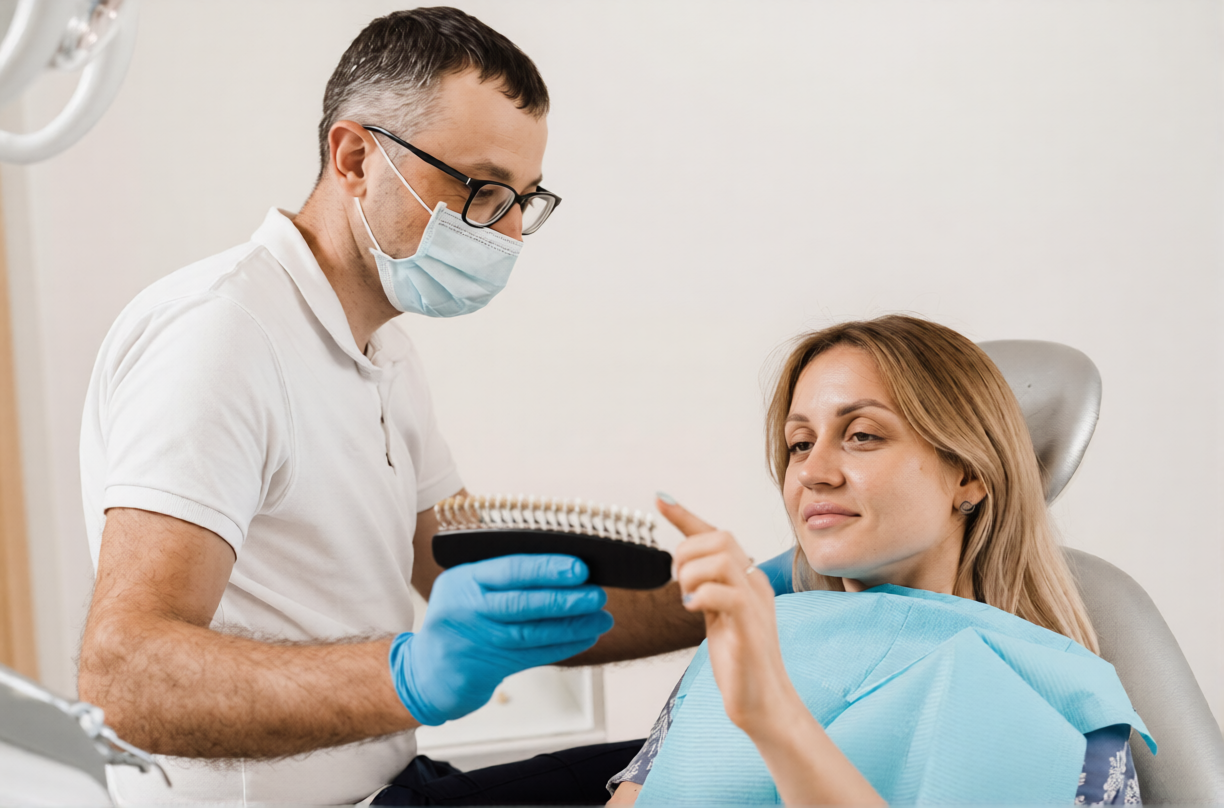
If you’re considering veneers, it’s important to consult a qualified dentist to determine whether they are the right treatment for your needs. Many Melbourne patients research veneers, hoping to address concerns like discolouration, chips, or gaps between teeth. Veneers can improve the appearance of your smile, but their suitability depends on several factors. Not everyone will be a good candidate for veneers.
Determining whether you’re a good candidate for veneers depends on multiple factors. Your oral health status, the amount of natural tooth structure you have, your lifestyle habits, and your cosmetic goals all play a role in this assessment. Veneers may be suitable for some patients, while others may benefit from alternative treatments that better address their specific needs.
This article outlines the factors that determine whether veneers may be a suitable treatment for you. It also covers the factors that might disqualify you from this treatment and discusses alternatives if veneers aren’t suitable. We’ll cover the characteristics dentists look for, the conditions that need to be addressed first, and how to determine the right path forward for your smile goals. Keep in mind that only a qualified dentist can make a definitive determination about your candidacy through a thorough examination and consultation.
Summary of the Content:
- Dental veneers are thin shells made from porcelain or composite resin that are bonded to the front surface of teeth to improve their appearance.
- Ideal candidates typically have healthy teeth and gums, sufficient enamel for bonding, and a commitment to maintaining proper oral hygiene.
- Veneers can help address severe discolouration that doesn’t respond to teeth whitening, minor chips or cracks, small gaps, and slight irregularities in tooth shape.
- Active dental problems such as decay or gum disease must be addressed and stabilised before veneers can be considered, as these conditions can compromise the procedure’s success.
- Habitual teeth grinding, insufficient tooth structure, and severe misalignment are factors that typically disqualify patients from veneer treatment or require management first.
- Alternative treatments include professional teeth whitening, composite bonding, orthodontics, and crowns.
- A qualified dentist can determine candidacy through a comprehensive examination, as individual circumstances vary and professional assessment is essential for appropriate treatment recommendations.
Understanding Dental Veneers: What They Are and What They Do
Dental veneers are thin shells made from porcelain or composite resin that are bonded to the front surface of your teeth. These custom-made shells are designed to cover the visible part of your tooth, helping to improve its appearance when cosmetic concerns exist. Melbourne patients often consider veneers to address various aesthetic issues in their smiles.
There are two main types of veneers: porcelain and composite resin. Traditional porcelain veneers are typically recommended for their durability and natural appearance. Porcelain closely mimics the light-reflecting properties of natural tooth enamel, which helps create results that blend with your surrounding teeth. Composite veneers are made from tooth-coloured resin and can be applied in a single visit, though they may not last as long as porcelain options.
Veneers can help address several cosmetic concerns. They may be suitable for concealing discolouration that doesn’t respond well to teeth whitening, covering small chips or cracks, closing gaps between teeth, or improving the shape of teeth that appear too short or irregularly shaped. Some patients with slightly crooked teeth find that veneers can create the appearance of better alignment, though they don’t actually move their teeth.
It’s important to understand that veneer placement is an irreversible procedure that carries risks, as with any dental procedure. The process requires removing a thin layer of enamel from your natural tooth structure — typically 0.5 to 0.7 millimetres. This enamel removal cannot be reversed, which means your teeth will always require some form of covering afterwards. Once you have veneers placed, your natural teeth underneath have been altered.
Risks include increased tooth sensitivity, particularly to hot or cold temperatures. The veneers themselves can chip, crack, or become damaged, especially if exposed to excessive force. Some patients experience gum irritation around the margins where the veneer meets the gum line. Additionally, veneers typically need to be replaced after many years of wear, though their lifespan can vary based on the materials used, your oral hygiene habits, and other factors.
Understanding what veneers can and cannot do helps you set realistic expectations. Veneers are a cosmetic treatment that improves the appearance of your teeth. They don’t strengthen weak teeth or address underlying dental problems. If you have decay, gum disease, or structural issues, these conditions must be managed before veneers can be considered. Your dentist will assess whether veneers are appropriate for your situation during a comprehensive consultation.
Essential Requirements: Who Makes an Ideal Candidate
Being a good candidate for veneers typically involves meeting several baseline criteria. These factors relate to your oral health status, the condition of your natural tooth structure, and certain lifestyle considerations. Dentists assess these elements to determine whether veneers are likely to be successful and long-lasting in your particular situation.
It’s important to understand that candidacy is assessed on an individual basis. Meeting the general guidelines discussed below doesn’t make veneers automatically recommended for you. Similarly, not meeting every criterion doesn’t automatically disqualify you. A dentist will consider multiple factors together and may suggest addressing certain issues before proceeding with veneers, or may recommend alternative treatments that better suit your needs.
The following sections explore the two most critical requirements that dentists evaluate when determining whether someone is a suitable candidate for veneers. These foundational elements must typically be in place before cosmetic treatment can proceed safely and effectively.
Good Oral Health and Sufficient Enamel
Healthy teeth and gums form the foundation for successful veneer placement. Veneers cannot be placed over teeth that have active decay, infections, or gum disease. These conditions compromise the bonding process and can worsen if not addressed before veneers are applied. Your dentist will need to examine your oral health thoroughly and complete any necessary treatments before veneers can be considered.
Adequate enamel is essential because the veneer bonding process requires removing a thin layer from the front surface of your tooth. Typically, dentists remove approximately 0.5 to 0.7 millimetres of enamel to create space for the veneer whilst maintaining natural tooth proportions. This preparation provides a surface where the porcelain or composite can bond securely. Without sufficient enamel, the veneer may not adhere properly, which can lead to early failure.
Patients with thin, eroded, or weakened enamel may discover that veneers aren’t appropriate for their situation. Once enamel is removed during veneer preparation, it cannot be replaced. Your natural tooth structure underneath the veneer will always be altered. If your enamel is already compromised, removing more for veneers could further weaken your teeth.
Your dentist will assess the thickness and quality of your enamel during your consultation. If you don’t have adequate enamel, alternative treatments like crowns might be more suitable. Crowns cover the entire tooth rather than just the front surface, providing both cosmetic improvement and structural support when natural tooth structure is limited.
Commitment to Oral Hygiene and Maintenance
Veneers require careful maintenance, just like natural teeth, to maintain their longevity and effectiveness. Being a good candidate means demonstrating commitment to maintaining proper oral hygiene habits long-term. This commitment is essential because whilst porcelain veneers themselves resist staining, the underlying natural tooth and the margins where the veneer meets your tooth can still develop problems if oral hygiene is poor.
Proper care for veneers involves brushing twice daily with fluoride toothpaste, flossing regularly to remove plaque from between your teeth and along the gum line, and attending routine dental check-ups and professional cleanings. Your Melbourne dental clinic typically recommends visits every six months, though your dentist may suggest more frequent visits depending on your individual needs. These appointments allow your dental team to monitor the condition of your veneers and address any concerns early.
Maintaining veneers requires a long-term commitment to good oral hygiene and regular dental check-ups to keep them in good condition. Veneers can last many years with proper care; however, they will eventually need to be replaced. The longevity of your veneers depends partly on how well you maintain them and your overall oral health throughout the years you have them.
Cosmetic Concerns That Veneers Can Address
Veneers are designed to address specific cosmetic dental concerns. Understanding whether your particular concerns align with what veneers can effectively manage is an important part of determining whether you’re a suitable candidate.
The following sections discuss various cosmetic concerns that veneers can help conceal. Keep in mind that your dentist will assess your individual situation to determine whether veneers are the most suitable option for your specific concerns.
Discolouration, Stains, and Minor Damage
Severe tooth discolouration that doesn’t respond well to professional teeth whitening is one of the most common reasons patients consider veneers. Not all discolouration is the same, which affects whether teeth whitening or veneers might be more appropriate for your situation.
Extrinsic stains affect the outer surface of your tooth enamel. These stains typically develop from consuming staining substances such as coffee, tea, or red wine, or from smoking. Professional teeth whitening can often effectively manage extrinsic stains, making it a less invasive first option before considering veneers. However, if whitening doesn’t achieve the results you’re looking for, veneers may be discussed as an alternative.
Intrinsic stains affect the internal structure of your tooth, beneath the enamel layer. These discolourations can result from various causes, including certain medications taken during tooth development (such as tetracycline), fluorosis from excessive fluoride exposure during childhood, or trauma that affected the tooth’s internal structure. Intrinsic stains typically don’t respond well to teeth whitening because the discolouration is internal. Veneers can conceal these types of stains by covering the discoloured tooth surface.
Minor cosmetic damage is another concern that veneers can address. Small chips on the edges of teeth, superficial cracks that affect appearance but not tooth integrity, or teeth that have become worn down over time from normal use can often be concealed with veneers.
If you have a broken tooth or significant structural damage, veneers likely won’t provide adequate support or protection. Crowns or other restorative treatments are typically necessary for teeth with extensive damage. Your dentist will assess the extent of any damage during your examination to determine the most appropriate treatment.
Veneers can improve the appearance of certain cosmetic concerns by covering the visible front surface of your teeth, but they may not be suitable for more extensive dental issues. They don’t eliminate the underlying issue; rather, they provide a new outer layer that improves appearance. Understanding this distinction helps set realistic expectations about what veneers can achieve for your smile.
Small Gaps and Minor Alignment Issues
Veneers may be suitable for closing small gaps between teeth or for concealing very minor misalignment. However, it’s essential to clearly understand the limitations. Veneers are not a substitute for orthodontic treatment and cannot address functional problems with tooth position or bite.
Small gaps, also called diastemas, are spaces between teeth that some patients find aesthetically concerning. When these gaps are minor, veneers can create the appearance of teeth that sit closer together. The veneer is slightly wider than your natural tooth, reducing or closing the visible gap. This approach works well for small spaces, particularly between the front teeth, where gaps are most noticeable.
Very minor alignment issues might also be concealed with veneers in some cases. This typically refers to situations where teeth have slight rotations or small irregularities in position that affect appearance but don’t cause functional problems. Veneers can create the appearance of better alignment by altering the shape and position of the visible tooth surface, though your teeth themselves remain in their original positions underneath.
Moderate to severe crowding, significant rotations, or bite problems typically aren’t appropriate for veneers. If your teeth are significantly misaligned or if crooked teeth affect how your upper and lower teeth meet, orthodontic treatment with braces or clear aligners is usually the recommended first step.
Your dentist will assess the severity of any gaps or alignment issues during your consultation. They may recommend orthodontics before veneers, orthodontics instead of veneers, or veneers alone if your concerns are truly minor.
Factors That May Disqualify You from Veneers
Certain conditions, structural issues, and lifestyle factors can make veneers unsuitable or increase the risk of complications. Understanding these factors helps you have realistic expectations about what needs to be addressed before veneers can be considered, or whether alternative treatments might be more appropriate for your situation.
It’s important to approach this information with the understanding that many disqualifying factors can be managed. Patients who aren’t current candidates may become suitable after preliminary treatments address the underlying issue. Additionally, if veneers aren’t appropriate for you, other treatment options can still help you work towards your smile goals.
The following sections explore specific categories of factors that typically disqualify patients from veneer treatment. These include active dental problems, structural limitations, and certain habits that place excessive stress on teeth. Your dentist will assess these factors during your consultation to determine the most suitable treatment path for your individual circumstances.
Active Dental Problems and Bruxism
Active oral health issues must be addressed before cosmetic treatment can proceed. Veneers cannot be placed over teeth affected by decay, infections, or gum disease. Covering these problems without addressing them first allows the conditions to worsen whilst being hidden from view, which can lead to serious complications.
Unmanaged cavities continue to spread beneath veneers, potentially requiring more extensive treatment later, including possible tooth loss if the decay reaches the inner pulp. Gum disease, whether gingivitis (mild inflammation) or periodontitis (more advanced disease affecting the bone supporting your teeth), must be brought under control before veneers can be considered. Placing veneers whilst gum disease is active can worsen the condition and may lead to veneer failure if the supporting structures of your teeth are compromised.
Infections in or around teeth also disqualify you from veneers until the infection is managed. Your dentist will examine your teeth and gums thoroughly during your consultation. If any of these conditions are discovered, they’ll recommend appropriate treatment first. Once your oral health is stable, candidacy for veneers can be reassessed.
Habitual teeth grinding or clenching, known as bruxism, is another factor that can disqualify patients from veneers. The excessive pressure and friction from grinding can cause veneers to chip, crack, or debond prematurely. This risk exists because veneers, particularly porcelain veneers, are strong but not indestructible. The repeated force from teeth grinding places stress on the veneer that it wasn’t designed to withstand in the long term.
The severity of bruxism matters when assessing candidacy. Mild teeth grinding that occurs occasionally may be manageable with protective measures such as wearing a night guard during sleep. A night guard is a custom-fitted appliance that creates a barrier between your upper and lower teeth, absorbing the forces from grinding and protecting both your veneers and natural teeth.
However, severe, uncontrolled grinding typically makes veneers unsuitable. Patients with significant bruxism may be better served by alternative treatments that provide more structural protection, or by addressing the grinding habit first before considering cosmetic treatment. Your dentist can assess the severity of your bruxism during your consultation and discuss whether management options like a night guard would make veneers feasible for you.
These factors are manageable in many cases. With appropriate treatment and management, patients who initially aren’t candidates may become suitable for veneers. Being honest with your dentist about your oral health history and any grinding habits you’re aware of helps them provide accurate guidance about your options.
Insufficient Tooth Structure or Severe Damage
Veneers require adequate healthy tooth structure to support them. If your natural tooth structure has been significantly compromised, veneers may not be appropriate, and a more comprehensive restoration might be necessary. Several situations can result in insufficient tooth structure.
Severe enamel erosion leaves teeth with inadequate surface for veneer bonding. Remember that veneer preparation requires removing a thin layer of enamel — if your enamel is already compromised, removing more could further weaken your teeth.
Extensive previous dental work that removed significant tooth structure also affects candidacy. If you have large existing fillings that occupy a substantial portion of your tooth, there may not be enough natural tooth remaining to support a veneer.
Teeth weakened by decay or trauma may also lack sufficient structure for veneers. If decay has affected a large portion of your tooth, or if trauma has resulted in cracks or fractures that compromise the tooth’s structural integrity, veneers likely won’t provide an adequate restoration. Covering a weakened tooth with a veneer doesn’t strengthen it and may lead to further problems if the tooth cannot support the forces of normal chewing.
For situations involving compromised tooth structure, dental crowns are typically the more appropriate option. Crowns cover the entire tooth rather than just the front surface, encasing it completely and providing both cosmetic improvement and structural support. Whilst this means more extensive tooth preparation is required, crowns offer the protection and strength needed when natural tooth structure is limited.
Severe Misalignment or Bite Problems
Significant orthodontic issues typically disqualify patients from veneers, as these are cosmetic covers that don’t address underlying structural problems with tooth position or bite alignment. Understanding the difference between minor cosmetic irregularities and functional alignment problems helps clarify when orthodontic treatment is the more appropriate option.
Veneers might conceal very minor cosmetic irregularities in tooth position, as discussed earlier. However, severe crowding, significant overbite or underbite, or bite problems that affect how your teeth come together when chewing require orthodontic treatment. These are structural issues that involve the actual position of your teeth in your jaw and how your upper and lower teeth align when you close your mouth.
Significant overbite (where upper teeth overlap lower teeth excessively) or underbite (where lower teeth sit in front of upper teeth when your mouth is closed) are bite problems that affect jaw function and may cause strain on your jaw joints. These issues require orthodontic treatment to move the teeth into positions where they meet properly. Covering misaligned teeth with veneers without addressing the bite problem can lead to additional complications, including uneven wear on the veneers or jaw discomfort.
Bite problems that affect your ability to chew comfortably also require orthodontic assessment. If your teeth don’t come together in a way that evenly distributes chewing forces, this can place abnormal stress on certain teeth. Placing veneers without addressing the underlying bite issue means those same forces will affect the veneers, potentially causing premature failure.
Orthodontic treatment with braces or clear aligners gradually moves your teeth into better positions, addressing both the aesthetic and functional aspects of misalignment. This process repositions your teeth within your jaw, improving their alignment and how your bite functions.
Alternative Treatment Options If Veneers Aren't Suitable
Not being a suitable candidate for veneers doesn’t mean cosmetic improvement isn’t possible. Modern dentistry offers multiple pathways to achieving your treatment goals, and the most appropriate treatment depends on your individual needs, the specific concerns you want to address, and your unique circumstances.
Different treatments are good at managing different problems. Some patients discover that less invasive options better suit their needs or budget. Others require more comprehensive treatments that address structural issues alongside aesthetic concerns. Your dentist will recommend the most appropriate treatment based on their clinical assessment of your teeth, gums, and bite, as well as your cosmetic goals and preferences.
Teeth Whitening, Bonding, and Minor Corrections
Professional teeth whitening may be appropriate if your primary concern is tooth discolouration without structural issues. This option is particularly suitable for extrinsic staining that develops on tooth enamel from consuming staining substances like coffee, tea, or red wine (a common concern for Melbourne’s café-loving residents) or from smoking.
Teeth whitening works well when overall colour improvement is your goal. However, it has limitations worth understanding. Whitening doesn’t address structural issues such as chips, cracks, or irregular tooth shapes. It may also not effectively lighten intrinsic stains — discolouration within the tooth structure rather than on the surface. Additionally, results are temporary, and you’ll need touch-up treatments over time to maintain the lighter colour.
The advantages of teeth whitening include being less invasive than veneers, completely reversible (your natural tooth structure remains unaltered), and typically less expensive. If discolouration is your main concern and your teeth don’t have structural issues, whitening may achieve your goals.
Composite bonding offers another less invasive alternative, particularly for minor cosmetic concerns. This treatment uses tooth-coloured resin material that your dentist applies directly to your tooth, sculpts into the desired shape, and hardens with a special light. Bonding can manage small chips, close minor gaps, or improve tooth shape without the extensive enamel removal required for veneers.
The process is typically completed in a single visit, making it a convenient option. Bonding requires minimal tooth preparation — often, no enamel removal is necessary, or only a very small amount is needed. This makes it a reversible treatment, unlike veneers. The material can be removed or adjusted later if desired, and your natural tooth remains intact underneath.
However, composite bonding has trade-offs to consider. The material is less durable than porcelain veneers and more prone to staining over time, particularly if you frequently consume staining substances. Composite bonding typically lasts three to seven years before needing adjustment or replacement, which is shorter than that of porcelain veneers. The material can also chip or break more easily under excessive force.
Orthodontics and Crowns for Structural Issues
Orthodontic treatment with braces or clear aligners becomes necessary when you have significant misalignment or bite problems that affect tooth position and function. Whilst this might initially seem disappointing if you were hoping for veneers, orthodontics actually addresses the underlying structural issue rather than just concealing it, which often provides better long-term outcomes.
Dental crowns are necessary when teeth have extensive damage, large existing restorations, or structural weakness that veneers cannot adequately address. A crown covers the entire tooth, not just the front surface, encasing it completely and providing both cosmetic improvement and structural support.
Crowns are appropriate for various situations. After root canal treatment, when the tooth structure has been hollowed out to remove infected pulp, a crown provides protection and strength. For heavily filled teeth where previous dental work has removed significant tooth structure, crowns offer a comprehensive covering. When teeth are severely weakened by decay or trauma, crowns restore both function and appearance.
Whilst crowns involve more extensive preparation than veneers, they’re the appropriate treatment when structural support is needed alongside cosmetic improvement. They protect weakened teeth from further damage whilst addressing aesthetic concerns. Your dentist will clearly explain when crowns are necessary based on the condition of your teeth and what each treatment option would achieve in your specific situation.
Final Thoughts
Determining whether you’re a good candidate for veneers involves assessing multiple factors. Ideal candidates typically have healthy teeth and gums, sufficient enamel to support bonding, realistic expectations for what veneers can achieve, and a commitment to long-term maintenance. However, certain factors may require alternative approaches, including active dental problems, habitual teeth grinding, insufficient tooth structure, or significant misalignment.
Multiple effective options exist for smile improvement, regardless of whether veneers are suitable. Candidacy is determined through professional assessment, not self-diagnosis. During a consultation at The Dental Co., you can expect a comprehensive examination of your teeth, gums, and bite, along with a discussion of your cosmetic goals. Your dentist will assess your suitability and explain which treatment options are most appropriate for your individual circumstances.
The consultation provides an opportunity to have all your questions answered and receive personalised advice. The Dental Co. is committed to supporting Melbourne patients in working towards their smile goals through appropriate, evidence-based treatment recommendations. If you’re considering veneers or want to explore your options, we invite you to book a consultation for a personalised assessment. You can contact our team to schedule your visit and take the first step towards understanding your treatment options.
Dr Justin Daniels (DEN0001779717) and Dr Niusha Ravadgar (DEN0002479271), General Dentists. Veneer placement is a cosmetic dental procedure that carries risks. A consultation is required to assess your individual suitability. Detailed information about risks and complications will be discussed during your consultation at The Dental Co.