

You have had an implant placed, but the crown has not been fitted and a move to Melbourne is approaching. You may be wondering who should finish the work, whether your original dates still apply and what to tell a new practice.
Start by asking both practices about a handover before booking the crown stage. healthdirect explains that implant treatment involves several appointments, with the artificial tooth attached later. At The Dental Co., the new-patient visit includes a history and assessment; bring your existing records and ask which appointment suits your situation.
What has been completed, and what is still planned?
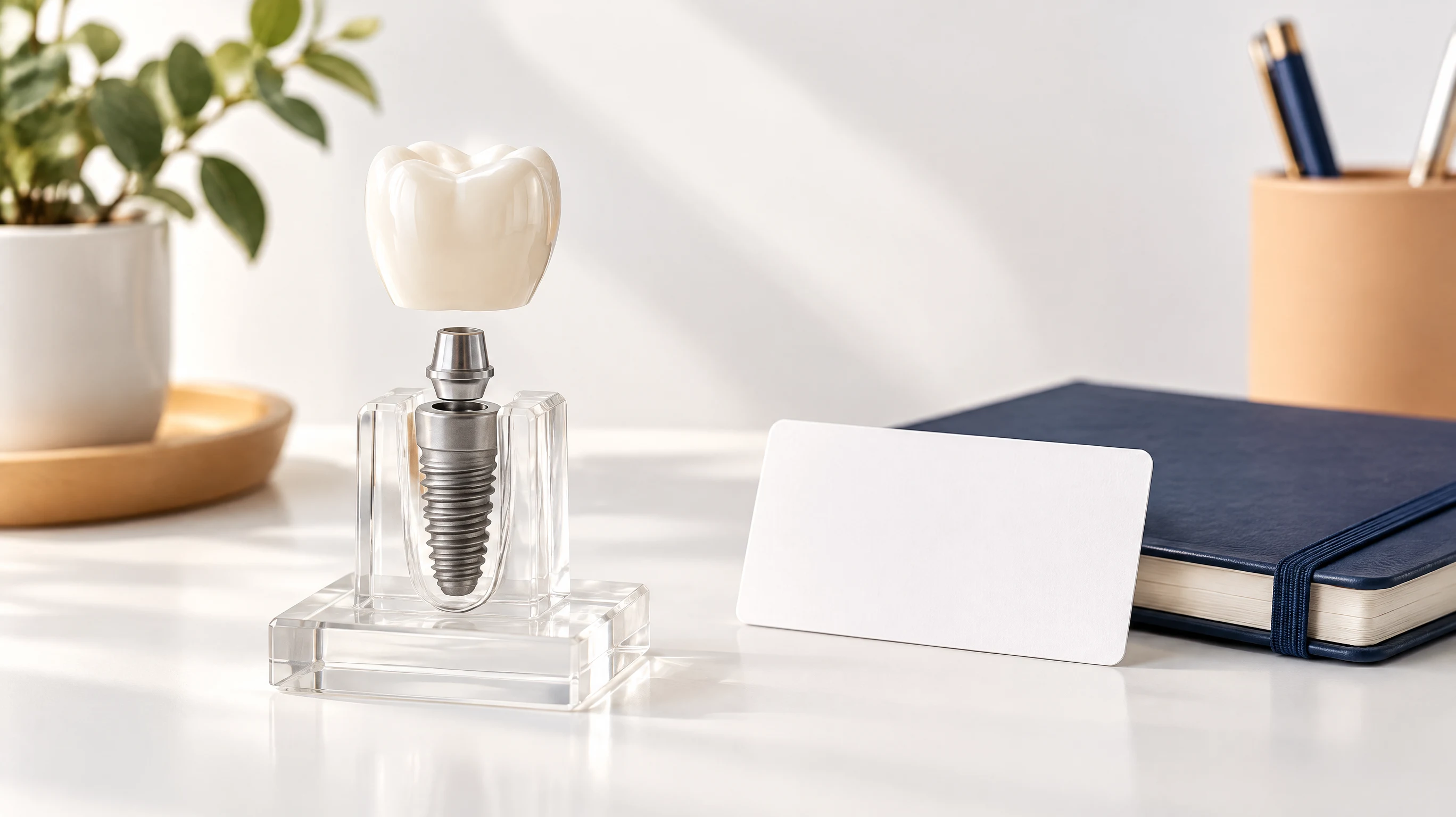
The implant post and the crown are different parts of treatment. healthdirect's February 2025 guidance describes a metal screw attached to the jawbone, with a crown, bridge or denture supported above it. Treatment usually takes place in stages. A date pencilled in for a crown is therefore something to discuss with the treating dentist, rather than a date a new practice can automatically adopt.
Before you call, write down the date of the last procedure and the next appointment you were expecting. Include the original dentist's name and practice contact details. If you do not know the technical name of the stage, say that. You do not need to translate a treatment plan into dental terminology to ask for an appointment.
Ask your original dentist to explain what has been completed and what follow-up they have planned. Our implant treatment page separates assessment, planning, implant placement, healing, restoration and maintenance. That distinction gives you a useful way to organise the handover conversation without trying to judge the implant's readiness yourself.
Which records should you ask the original practice for?
Ask what information it holds about the treatment already carried out and the work still planned. The Office of the Australian Information Commissioner (OAIC) explains your general right to request access to health information. The list below is a set of questions for the record holder, not a claim that every practice has every document.
| Record to ask about | What to clarify |
|---|---|
| Treatment plan and visit notes | Which steps have been completed, and what was proposed next? |
| Implant identification information, if recorded | Is there a card, manufacturer or system name, or a device label in the file? |
| Dated X-rays and other images | Which images are available, and how can copies be transferred? |
| Crown or laboratory information, if work has started | Has a crown been ordered, and which practice or laboratory holds those details? |
| Written aftercare and follow-up plan | What instructions were given, and whom should you contact about them? |
| Estimate, invoices and outstanding appointments | What has been paid, what remains booked and what needs discussing separately? |
If different practices placed the implant and planned the crown, contact both. Describe which part each handled rather than assuming one office has the entire file. Keep your own list of requests and replies, including anything the practice says it does not hold. Bring that list even when some records are still on their way.
How do Australian records-access rules work?
You can request access from the provider holding your information. The OAIC's Access your health information guidance, checked on 1 November 2026, states:
“Australian privacy law gives you a general right to request access to the health information a health service provider holds about you.”
Office of the Australian Information Commissioner, Access your health information, opening section.
The same OAIC guidance says you may be asked to put the request in writing and provide identifying information. You can specify the information you want and how you would like to receive it, including asking for a copy to go to another health provider. A practice may offer another format if the requested one is unreasonable or impractical.
A request is not an immediate transfer. The OAIC generally considers 30 days a reasonable response period. Access charges may apply, but cannot be excessive, and exceptions can permit refusal. Ask the practice about the expected response and likely charge. The OAIC says a refusal must be explained in writing with information about how to complain.
For a transfer to The Dental Co., call us to confirm the receiving details before sending health information. Ask the original practice what authorisation it needs. Avoid posting records in a public comment or social-media thread. When you receive a reply, check whether it includes the attachments you requested rather than treating a sent email as the end of the process.
What if your implant was placed overseas?
Contact the overseas practice and ask for its records-release process. The Australian access guidance above describes Australian privacy rights; do not assume it sets a deadline for a clinic in another country. Tell the new practice which country and clinic provided the treatment, what language the documents are in and whether any records are missing.
If you have only a card, an invoice or a treatment-plan email, bring it. Ask the original practice to explain any abbreviations and identify the person who can answer follow-up questions. Do not infer a device brand from a picture online. Ask the receiving dentist what further information is needed before discussing whether the unfinished treatment can be taken on.
What happens at the first appointment in Windsor?
The first step is an assessment, not an assumption that a crown can be fitted that day. Our New Patient Expectations page describes a one-hour New Patient Experience covering the teeth, gums and mouth, with dental history, imaging and a personalised plan. Ask when booking whether that appointment is appropriate for a handover during implant treatment and what the fee will be.
The clinic asks you to bring previous dental records or X-rays, a current medication list and private health-fund information if you have it. It also asks new patients to arrive 10–15 minutes early. These are the practice's published preparation instructions; confirm your own appointment details with reception rather than assuming a specific clinician or appointment type is available.
Our implant consultation information describes reviewing your dental history and oral health, then discussing a plan with the proposed procedures, timeline and costs. For an implant placed elsewhere, ask specifically whether the team can assess the system and unfinished restoration. The website does not establish that every outside implant system or existing laboratory order can be accommodated.
Will old X-rays or the original quote settle the new plan?
Bring the old images and quote, but ask the dentist what they can use and what still needs checking. The Dental Co.'s first-visit information includes assessment and imaging; it does not say that carrying old images removes the need for a current clinical assessment. Ask why any further image is recommended and how it relates to the decision being made.
Keep the financial conversation separate from the records request. Ask the original practice to explain its own payments and outstanding work, and the receiving practice for the cost of its assessment and any proposed treatment. healthdirect advises knowing the costs before treatment starts and obtaining a quotation. Do not assume one practice's payment, laboratory arrangement or warranty transfers to another.
Questions to take to the handover appointment
Write these down so you can leave with a clear account of what is known and what remains to be confirmed:
- What stage does my existing record describe, and which information is still missing?
- Can this practice assess the implant system and the crown work already planned?
- Does anyone need to speak with the original dentist or laboratory before a plan is proposed?
- What assessment or imaging do you recommend, and why?
- What are the options, risks, expected appointments and itemised costs for my situation?
- Which practice is responsible for each next step, and whom should I contact with a concern?
A new plan needs an individual discussion. healthdirect explains that medical conditions and medicines form part of implant assessment, and lists possible complications including infection, nerve damage and sinus problems. Records do not remove those risks. If further surgery is proposed, ask about its risks, suitability and alternatives before deciding; do not treat a handover as consent to another procedure.
If you have symptoms, mention them when you call
Tell the practice about pain, swelling or any change around the implant when requesting an appointment, even if the file transfer is incomplete. healthdirect advises seeking dental advice about problems after implant treatment and having swelling or inflammation checked and treated. Ask for advice about your symptoms and appointment urgency rather than waiting for an administrative deadline or changing aftercare yourself.
For background on the stages, our existing article on how long a dental implant procedure takes explains the broader sequence. It is general reading, not a timetable for your own handover.
Before your move: a practical checklist
- Keep the original clinic's contact details and the date of your last appointment.
- Request the treatment plan, dated images and available implant or crown information.
- Confirm the records-transfer destination and any authorisation or access charge.
- Make a note of documents that have not arrived or details you do not know.
- Bring your current medication list, questions and health-fund information.
- Confirm the appointment type and fee, and tell reception about current symptoms.
- Ask both practices who is responsible for the next follow-up before cancelling existing appointments.
To ask about an assessment, call The Dental Co. on (03) 9908 8100. We are at Level 2, 6–10 Chapel Street, Windsor; our contact page has the practice details. You can say: “I am moving to Melbourne. My implant has been placed, but the crown is not fitted yet. Which appointment should I book, and which records would you like before I come?”
Sources and general information
Sources checked 1 November 2026. This is general published information, not personal dental or legal advice. Your dentist needs to assess your own treatment and records.