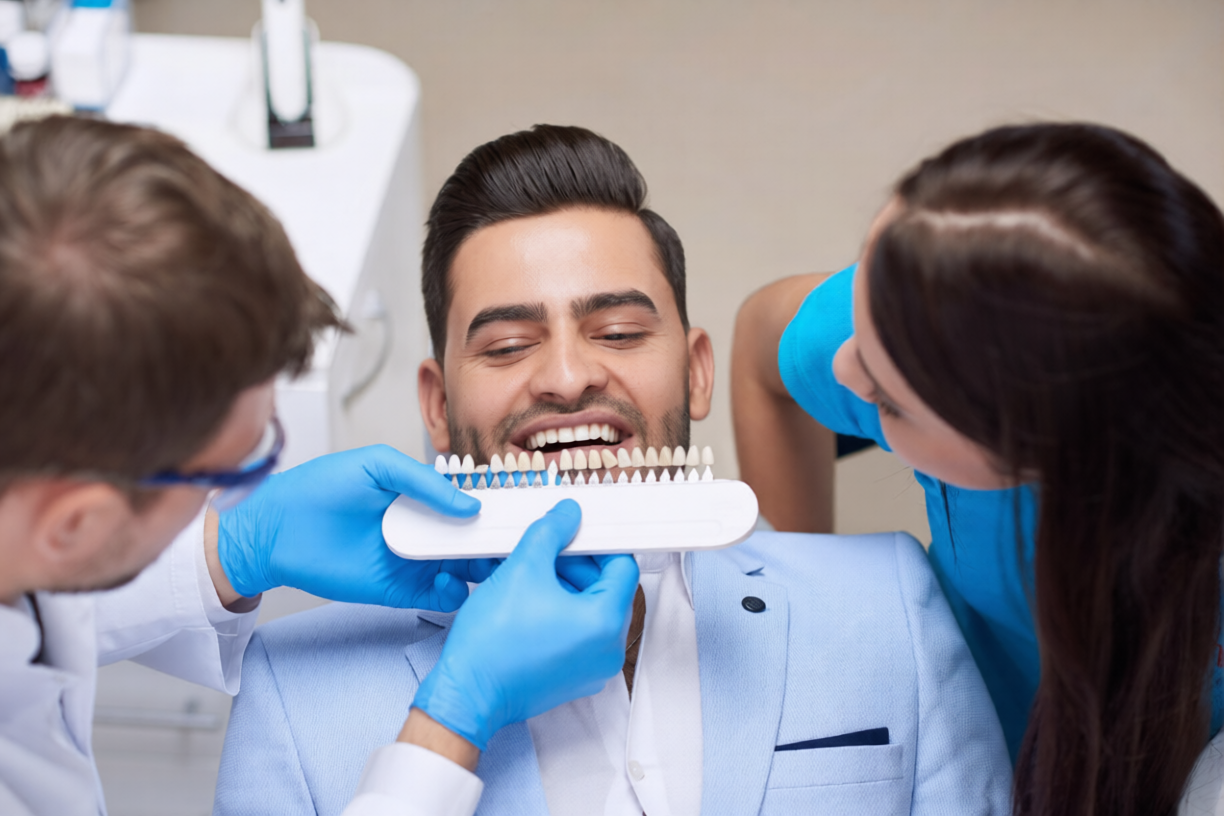
If you’re considering veneers, you might be wondering how long veneer treatment takes and whether you can fit the process into your busy schedule. Between work commitments, family responsibilities, and personal obligations, finding time for dental treatment can feel challenging. Understanding the time commitment is essential for planning your treatment and setting realistic expectations.
The standard veneer procedure timeline spans 2-4 weeks from your initial consultation to final placement. Most patients attend 2-3 main appointments during this period. Your individual timeline may vary based on your specific needs, the number of veneers being placed, and your oral health status.
This guide walks you through each stage of the veneer process with realistic timeframes. We’ll explain what happens at each appointment, how long veneer treatment takes at each step, and the factors that can influence your treatment duration. At The Dental Co, we serve Melbourne patients with transparent treatment planning and clear communication about what to expect.
Summary of the Content:
- Veneer treatment typically takes 2-4 weeks from consultation to final placement, with 2-3 main appointments throughout.
- The initial consultation lasts 30-60 minutes. It includes an oral examination, smile assessment, treatment suitability discussion, and cost estimate, with time to consider your options.
- Tooth preparation and impressions require 1-2 hours and involve enamel reshaping, digital scanning, shade selection, and temporary veneer placement while final veneers are fabricated.
- Custom laboratory fabrication takes approximately 2-3 weeks, during which dental technicians craft each veneer to precise specifications based on your impressions and desired aesthetic.
- The final bonding appointment lasts 1-2 hours and includes temporary veneer removal, trial fitting, bonding, and final adjustments to support comfortable results.
- Several veneer treatment factors affecting the timeline include the number of veneers needed, your oral health status, customisation requirements, laboratory turnaround time, and scheduling availability.
The Typical Veneer Treatment Timeline: What to Expect
The veneer procedure timeline generally spans 2-4 weeks from your initial consultation to final placement. Most patients attend 2-3 main visits during this period, though your specific timeline may differ based on individual circumstances.
| Timeline Aspect | Details |
| Total Duration | 2-4 weeks from first consultation to final placement |
| Number of Appointments | 2-3 main visits |
| Consultation Length | 30-60 minutes |
| Preparation Appointment | 1-2 hours (varies with number of veneers) |
| Laboratory Fabrication | 2-3 weeks |
| Final Bonding Appointment | 1-2 hours |
Between your preparation appointment and final placement, there’s a fabrication period while the dental laboratory creates your custom veneers. During this time, you’ll wear temporary veneers that protect your prepared teeth.
Key factors affecting your timeline include the following:
- The number of veneers being placed affects appointment duration—more veneers typically require longer sessions.
- Your current oral health status matters, as preliminary treatments like fillings or gum therapy add time before veneer work begins.
- Laboratory schedule and turnaround time influence when your final veneers are ready for placement.
- Your personal schedule and the dental clinic’s availability determine how quickly appointments can be coordinated.
- Whether any adjustments are needed at the final fitting may occasionally require additional brief visits.
Stage 1: Initial Consultation and Smile Assessment (Week 1)
Your veneer treatment process begins with a comprehensive consultation that typically lasts 30-60 minutes. This appointment helps your dentist understand your goals and determine whether veneers are an appropriate option for your situation.
What happens during your consultation:
- Oral Examination:
Your dentist conducts a thorough oral examination to assess the health of your teeth and gums for any underlying issues. - Smile Goals Discussion:
You discuss what you’d like to achieve with your smile and share any aesthetic expectations with your dentist. - Suitability Assessment:
Your dentist assesses whether veneers are suitable for your particular needs, as this treatment may not be appropriate for everyone. - Digital Imaging:
Digital imaging or photographs are taken for treatment planning purposes to help design your veneers. - X-Ray Evaluation:
X-rays may be taken if needed to evaluate tooth structure and underlying health that isn’t visible during examination. - Process Explanation:
You receive a clear explanation of the complete process, timeline, and what to expect at each stage of treatment. - Veneer Types:
Your dentist discusses the different veneer types available, including porcelain and composite options where applicable. - Cost Discussion:
You receive a cost estimate and learn about payment options that might suit your circumstances and budget. - Questions Opportunity:
You can ask questions and address any concerns about the procedure before making a decision.
Important decision-making considerations:
After your consultation, you’ll have time to consider whether you’d like to proceed. This is not a same-day treatment start—informed decision-making is important, and there’s no pressure to make an immediate commitment.
Some patients may need to address other dental health issues first. Your dentist will assess your oral health and determine if any concerns require attention before veneer treatment can begin. Common issues that need addressing include gum disease, tooth decay, or significant tartar buildup.
Timeline impact of preliminary treatments:
If preliminary treatments are required, such as fillings or a thorough cleaning, this can add 1-2 weeks to your timeline before the veneer process begins. Gum disease treatment may also add 1-2 weeks, depending on severity. Your dentist will explain what needs to be completed and how this affects your overall timeline. These preparatory steps contribute to better long-term outcomes for your veneers.
Stage 2: Tooth Preparation and Digital Impressions (Week 1-2)
The tooth preparation appointment typically takes 1-2 hours, depending on the number of teeth being prepared. This is when your teeth are prepared to receive veneers, and impressions are taken for the laboratory.
- Tooth Preparation
- Enamel Reshaping:
A thin layer of enamel, typically 0.3-0.5mm, is removed from the front surface of each tooth. - Creating Space:
This step creates the necessary space for your veneers to sit flush with the surrounding teeth. - Comfort Measures:
A local anaesthetic is used to help keep you comfortable during this process. - Conservative Approach:
Modern techniques focus on minimal tooth alteration. - Important Note:
This step is generally irreversible, so thorough consultation beforehand is essential.
- Enamel Reshaping:
- Impressions and Scans
- Digital Scanning:
Digital scanning or traditional impressions create precise moulds of your prepared teeth. - Shade Selection:
You choose the veneer colour to match natural teeth or achieve your desired aesthetic. - Bite Assessment:
Your dentist verifies that the veneers will align properly with the opposing teeth. - Reference Photographs:
Additional images serve as visual references for the laboratory.
- Digital Scanning:
- Temporary Veneers
- Protection:
Temporary veneers protect your prepared teeth during fabrication. - Duration:
You’ll wear these for approximately 2-3 weeks while final veneers are created. - Care Instructions:
Avoid very hard or sticky foods and maintain oral hygiene. - Preview:
Temporaries provide a preview of what the final result may look like. - Adjustment:
Temporary veneers may feel slightly different and require a brief adjustment period.
- Protection:
Impressions are sent to the dental laboratory for the fabrication of custom veneers. The laboratory process typically takes 2-3 weeks. Dental technicians handcraft each veneer to precise specifications. You wear temporary veneers and continue normal activities with some dietary precautions.
More veneers mean longer appointment time. Complex cases may require additional planning. Some clinics have in-house labs that may reduce fabrication time. Laboratory turnaround time typically takes 2-3 weeks.
Stage 3: Custom Veneer Creation (Weeks 2-3)
While you’re wearing your temporary veneers, dental technicians are working on creating your final veneers in the laboratory. This fabrication process is an essential part of achieving quality results.
Laboratory Process
Each veneer is individually crafted by experienced technicians using high-grade porcelain that mimics natural tooth translucency. Veneers are designed to exact specifications from your impressions. Careful attention goes into colour matching—matching the shade, translucency, and surface texture. The laboratory performs multiple quality control checks to verify fit, appearance, and durability.
Typical Fabrication Timeline
Standard turnaround is 2-3 weeks from impressions to delivery. Factors affecting timing include laboratory workload and schedule, complexity of the case, and any custom requests or special characteristics. Communication between the dental clinic and laboratory may also extend the timeline if adjustments are needed.
Living with Temporary Veneers
You’ll wear temporary veneers for approximately 2-3 weeks. Continue brushing and flossing carefully. Avoid biting into very hard foods, such as apples or crusty bread. Be cautious with sticky foods that might dislodge temporaries. Use care when flossing around temporary veneers. Slight sensitivity or minor speech adjustments are normal initially. Contact your dentist if a temporary becomes loose, breaks, or causes discomfort. Temporary veneers provide a preview but won’t have the same polish and translucency as final porcelain veneers.
Your dental clinic will typically schedule your final appointment once the veneers are received. Some flexibility in scheduling is available based on your availability. Urgent scheduling is generally not necessary unless temporary veneer issues arise.
Stage 4: Final Veneer Bonding and Placement (Week 3-4)
The final bonding appointment typically takes 1-2 hours, depending on the number of veneers being placed. This is when your temporary veneers are removed, and your final veneers are bonded into place.
- Temporary Veneer Removal
- Careful Removal:
The temporary veneers are carefully removed from your prepared teeth. - Thorough Cleaning:
Your tooth surfaces are thoroughly cleaned to prepare for the bonding process. - Final Check:
Your dentist verifies that the prepared teeth are ready for final bonding.
- Careful Removal:
- Trial Fitting
- Initial Placement:
Veneers are positioned without final bonding first to assess fit and appearance. - Appearance Check:
You and your dentist review the colour, shape, and overall aesthetic together. - Fit Assessment:
Your dentist verifies veneers sit properly against your teeth and gums. - Bite Evaluation:
Your dentist checks that the veneers align properly with your opposing teeth. - Adjustment Opportunity:
Minor modifications can be made at this stage if needed. - Patient Approval:
This is your chance to confirm you’re happy with the appearance before final bonding.
- Initial Placement:
- Long-lasting Bonding
- Surface Preparation:
Your teeth are etched and cleaned to create an optimal bonding surface. - Adhesive Application:
Particular dental cement is applied to each veneer. - Precise Placement:
Each veneer is carefully positioned and pressed into place. - Curing Process:
A specific light hardens the bonding cement. - Excess Removal:
Any extra cement is carefully cleaned away from around the veneers. - Final Polish:
Veneers are polished to achieve a natural lustre.
- Surface Preparation:
- Final Adjustments
- Bite Check:
Your dentist verifies comfortable contact between your upper and lower teeth. - Edge Refinement:
Any rough areas are smoothed for comfort. - Comfort Confirmation:
You provide feedback on how the veneers feel. - Minor Modifications:
Small adjustments can be made chairside if needed.
- Bite Check:
You may experience slight sensitivity initially, though this varies between patients. You can typically resume eating normally after the anaesthetic-induced numbness wears off. Your dentist will provide general care instructions for normal brushing and flossing, along with specific guidance. Some dental clinics schedule a brief check-up after 1-2 weeks.
This is typically the final major appointment in your veneer treatment. Some patients may need a brief follow-up visit for fine-tuning. Most patients adapt to their veneers within a few days of placement.
Factors That May Influence Your Treatment Timeline
Several veneer treatment factors affecting the timeline can affect how long veneer treatment takes from start to finish. Understanding these variables helps you set appropriate expectations for your own veneer procedure timeline.
- Number of Veneers:
A single tooth veneer may require less time during preparation and bonding appointments. Full smile makeovers involving 8-10 teeth require longer appointments for both preparation and bonding. More veneers may also need longer fabrication time to accommodate the additional laboratory work. - Oral Health Status:
If your teeth and gums are healthy, treatment can proceed as scheduled without delays. However, gum disease treatment may add 2-4 weeks before veneer work can begin. Cavities need to be filled before veneers are placed. Root canal treatment adds time if required for any teeth receiving veneers. Professional cleaning may be needed if significant tartar buildup is present. Any preliminary treatments add time to your overall timeline before the veneer process begins. - Customisation Requirements:
Complex aesthetic goals may require additional planning time and communication between your dentist and the laboratory. Extensive shade matching or specific veneer characteristics might need extra attention during fabrication. Digital Smile Design or similar preview technologies add a consultation step to the process. Specific requests require additional time for the laboratory to fulfil accurately. - Laboratory Turnaround:
Standard fabrication typically takes 2-3 weeks. Complex cases may take slightly longer than standard timeframes. Laboratory schedules during busy periods can affect turnaround times. Some dental clinics have in-house laboratories that may reduce waiting time, though this varies by location. - Scheduling Availability:
Your personal schedule and availability for appointments play a role in the timeline. The dental clinic’s appointment availability influences how quickly visits can be coordinated. Having flexibility in your schedule can allow you to schedule appointments closer together. Holiday periods may affect both the clinic’s schedule and the laboratory’s operating hours. - Need for Adjustments:
Most veneers fit well at the first placement appointment. Occasional minor adjustments may require an additional brief appointment for comfort. In some cases, bite refinement is needed to achieve optimal comfort. If a veneer needs to be remade, which is rare, this adds approximately 2-3 weeks to the process.
While 2-4 weeks is usual for straightforward cases, some patients may need 6-8 weeks or more, depending on their particular circumstances. Open communication with your dentist throughout the process helps set appropriate expectations for your individual timeline. Quality results require appropriate time—rushing the process may compromise the outcome you’re working towards.
Living with Temporary Veneers: Tips and Expectations
During the 2-3 week period while your final veneers are being fabricated, you’ll wear temporary veneers. Understanding how to care for them and what to expect during this stage of your veneer procedure timeline makes the waiting period more comfortable.
Care Guidelines
- Continue brushing your teeth twice daily with a soft-bristled toothbrush.
- Be careful around the temporary veneers to avoid accidentally dislodging them.
- Floss daily, but use care when flossing near the temporary veneers—a simple technique helps prevent them from loosening.
Foods requiring caution:
| Food Category | Examples | Why Be Careful |
| Hard Foods | Raw vegetables, nuts, hard candies | Can damage or dislodge temporary veneers |
| Sticky Foods | Caramels, toffee, and chewing gum | May pull temporary veneers off your teeth |
| Temperature Extremes | Very hot or very cold items | Might increase temporary sensitivity |
Most foods are fine to eat with reasonable caution. Try to distribute chewing pressure across your teeth rather than biting directly into hard items with the front teeth, where temporaries are typically placed.
What’s Normal
- Some temporary sensitivity to temperature is common and usually mild.
- The temporary veneers may feel slightly different from your natural teeth—this is expected.
- Temporary veneers don’t have the same polished finish as final veneers, so there may be a visual difference.
- You might notice a minor adjustment period with speech for a day or two as your mouth adapts.
- Slight gum tenderness near the preparation sites can occur but typically goes away quickly.
When to Contact Your Dentist
- A temporary veneer becomes loose or falls off:
This requires prompt attention to protect your prepared tooth and prevent discomfort. - You experience significant discomfort or persistent sensitivity:
Whilst mild sensitivity can be normal, significant or ongoing discomfort may indicate an issue that needs assessment. - Sharp edges cause irritation to your tongue or cheeks:
Your dentist can smooth any rough areas to improve comfort during the waiting period. - You have concerns about your bite or jaw discomfort:
Changes in how your teeth come together or jaw pain, should be evaluated by your dentist. - Any other issues affect your comfort or function:
If anything feels wrong or concerning, it’s appropriate to contact your dental clinic for guidance.
This waiting period is temporary and necessary for the quality fabrication of your final veneers. Over the next 2-3 weeks, your veneers are being carefully crafted by technicians. Most patients adapt quickly and manage well with temporary veneers throughout this phase. The temporary veneers also provide a preview of your new smile, giving you a sense of what to expect from the final result.
How Does the Veneer Timeline Compare to Other Treatments?
Understanding how the veneer timeline compares to other dental treatments can help you set realistic expectations. This comparison can also help you make informed choices about which approach might suit your needs.
| Treatment Type | Common Duration | Number of Appointments | Key Characteristics |
| Porcelain Veneers | 2-4 weeks | 2-3 appointments | Custom fabrication requires laboratory time; multiple appointments for preparation and placement; results are long-lasting and comprehensive |
| Composite Bonding | Often a single visit | 1-2 appointments | Can often be completed in a single appointment; less extensive preparation required; may be suitable for minor cosmetic concerns; different durability profile |
| Professional Whitening | 1-2 weeks | 1-2 appointments for in-office; 1-2 weeks for take-home kits | Addresses tooth colour only; doesn’t change shape or alignment; different treatment for different concerns |
| Clear Aligners/Orthodontics | Several months to 1-2+ years | Regular check-ups throughout | Addresses alignment and bite issues; different approach for different concerns, depending on complexity |
Each treatment serves different purposes—comparing timelines is about understanding time commitment, not indicating the advantages of one option over another. Your dentist will recommend the most suitable option based on your specific concerns and goals. Individual needs differ significantly—what’s appropriate for one patient may not be the ideal approach for another.
Planning Your Veneer Treatment Timeline
When you’re considering veneers, planning the timeline around your schedule helps the process go smoothly. Understanding how to coordinate your dental veneer appointment schedule with your daily life makes the experience more manageable.
Scheduling Considerations
- Some patients prefer to schedule appointments in consecutive weeks to complete treatment quickly.
- Others prefer spacing appointments out to better accommodate work or personal commitments.
- Most appointments can be scheduled around regular work commitments without requiring extensive time off.
- Local anaesthetic effects typically wear off within hours, so minimal recovery time is needed.
- Temporary veneers allow you to maintain normal activities during the fabrication period.
Planning Tips
- The initial consultation can often be scheduled relatively quickly, giving you flexibility to begin the process when it suits you.
- Plan for 1-2 hours for your preparation appointment—you might want to avoid scheduling back-to-back commitments immediately afterwards.
- The final bonding appointment has similar duration requirements; some patients prefer afternoon appointments to allow adjustment time.
Working around important dates:
If you have a specific event date in mind, work backwards to plan your treatment start date with your dentist. Build in some flexibility for unexpected adjustments or schedule changes. Plan if you have work, travel or holiday plans during the usual treatment period.
Timeline Communication
Discuss your timing goals with your dentist during the consultation so they can help plan accordingly. Be realistic about your availability and commitment to the dental veneer appointment schedule. Ask questions about what flexibility exists in scheduling—your dental team can work with you to find suitable times.
Realistic Expectations
While veneers don’t require extensive time away from work or daily activities, they do require commitment to the scheduled appointments. Quality results require appropriate time—rushing the process can compromise the outcome you’re working towards. Open communication with your dental team throughout the process helps coordinate scheduling effectively.
Understanding Why Adequate Time Is Important
The veneer process takes several weeks for good reasons. Understanding why adequate time matters helps you appreciate the care that goes into creating quality results.
Custom Fabrication Requires Time
Each veneer is individually crafted to precise specifications that match your unique tooth structure. Technicians carefully layer porcelain to achieve the natural translucency and colour characteristics you need. Quality work cannot be rushed without potentially compromising the results you’re working towards. Attention to detail during fabrication supports the longevity that veneers can provide—taking the appropriate time contributes to outcomes that can last 10-15 years or more with proper care.
Healing and Adaptation
After tooth preparation, your gums need time to settle into their new contours. Temporary veneers allow you to gradually adjust to changes in your smile. This period gives you time to visualise and confirm your desired outcome before the final veneers are placed. Having time between appointments allows for any minor modifications to be addressed before final placement.
Comprehensive Assessment
The initial consultation provides time to verify that veneers are an appropriate treatment option for your situation. Multiple visits allow your dentist to conduct a thorough evaluation of how the treatment is progressing. Your dentist can assess how the temporary veneers function before finalising. The trial fitting at the appointment provides an opportunity to confirm you’re satisfied before final bonding takes place.
Long-Term Performance
Following the proper process supports veneer longevity—veneers can last 10-15 years or more when properly placed and maintained. Taking appropriate time at each stage may help reduce risks and allow for adjustments as needed. The staged approach provides opportunities for refinements along the way. This methodical process supports informed decision-making at each step, so you’re never rushed into decisions before you’ve had time to consider your choices.
Quality Over Speed
While the timeline matters for practical planning purposes, quality should not be sacrificed to save time. Appropriate time investment supports optimal outcomes for your individual situation. Your dentist’s experience and attention to detail throughout the process matter more than how quickly treatment is completed. Individual needs require individualised timelines—what’s appropriate for one patient may differ from what another patient needs.
Final Thoughts
How long does veneer treatment take? Veneer treatment typically spans 2-4 weeks from consultation to final placement, involving 2-3 main appointments. Custom fabrication requires approximately 2-3 weeks for quality results. Individual timelines vary based on specific needs, the number of veneers, and other factors. Temporary veneers protect teeth and provide a preview during fabrication. Treatment requires commitment to appointments, and adequate time supports quality outcomes. Open communication with your dentist helps establish appropriate expectations for the timeline.
The Dental Co serves Windsor, Prahran, South Yarra, and the surrounding Melbourne suburbs. We offer comprehensive consultations to assess whether veneers are suitable for your situation. If you’d like to discuss your individual veneer procedure timeline, book a consultation with our dental team. We’ll answer your questions and provide a personalised assessment. Contact our clinic to arrange a consultation at a time that works for you.